Tokyo
Tokyo Bangkok
 Seoul
Seoul Singapore
Thai Yen Ta Fo Recipe: Street Vendor Balance at Home
Most home cooks mess up Yen Ta Fo by treating it like a one-flavor wonder. They nail the sweetness or the spice and think that’s enough. But this Bangkok street food classic thrives on tension—four distinct flavors battling it out in harmony. Screw up the balance, and you’ve got pink noodle soup. Nail it, and you’ll see why Yaowarat vendors have lunchtime crowds spilling into the streets.
The Four-Flavor Fight Club (That Actually Works)
Yen Ta Fo looks simple: rice noodles in sweet-sour broth with crispy bits and greens. The broth’s where things get tricky. Fermented bean curd (tau nao) brings salty umami. Tamarind paste adds sour. Palm sugar sweetens. Dried chilies or chili oil bring heat—but here’s where most go wrong: the spice should hum, not shout.
Shops like Yen Ta Fo Nai Mueang near Hua Lamphong station use about three tablespoons of fermented bean curd to one each of tamarind and palm sugar. Taste should hit in waves—salt first, then sweet, then sour, then a slow chili warmth. If one flavor bulldozes the others, start over. The magic’s in the push-pull.
Better Technique Beats Fancy Ingredients
This broth comes together fast—no all-day simmering. That means no shortcuts with the fermented bean curd. Dissolve it completely in warm water first. Strain out lumps unless you want grainy broth. This one step separates pro results from amateur hour.
Toast dried chilies lightly before crushing—it deepens their flavor without turning harsh. Use fresh tamarind paste; the old stuff tastes flat. Mix it with warm broth first to prevent clumping. Add palm sugar last, after the broth cools slightly—high heat makes it gritty. These aren’t extra steps. They’re what keeps the dish from tasting slapped together.
Stack Your Bowl Like a Street Pro
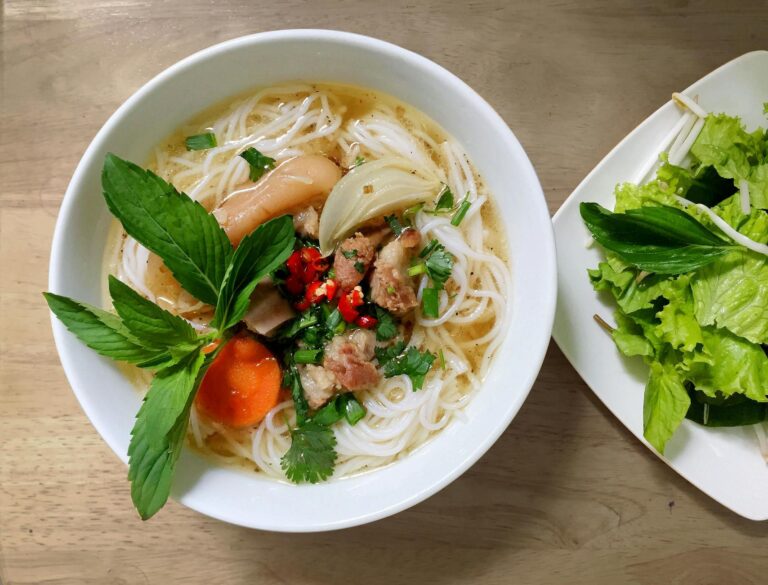
Blanch rice noodles separately. Pour hot broth over them. Now the fun part: texture. Crispy shallots (if you’re feeling fancy), tofu puffs (tau tod), shrimp or fish cakes, and fresh herbs—mint, cilantro, Chinese celery if available. Everything should keep its personality. No mush allowed.
Greens matter. Water spinach (morning glory) is classic, but bok choy works outside Thailand. Toss them in last—they should wilt slightly but stay crisp. Serve with condiments on the side: extra chili oil, vinegar, crushed peanuts. This isn’t lazy. It’s letting people tweak their bowl.
Want to master this? Make the broth base once and tweak relentlessly. Adjust one thing at a time. Take notes. The vendors who’ve done this for decades didn’t wing it. Neither should you.