Tokyo
Tokyo Bangkok
 Seoul
Seoul Singapore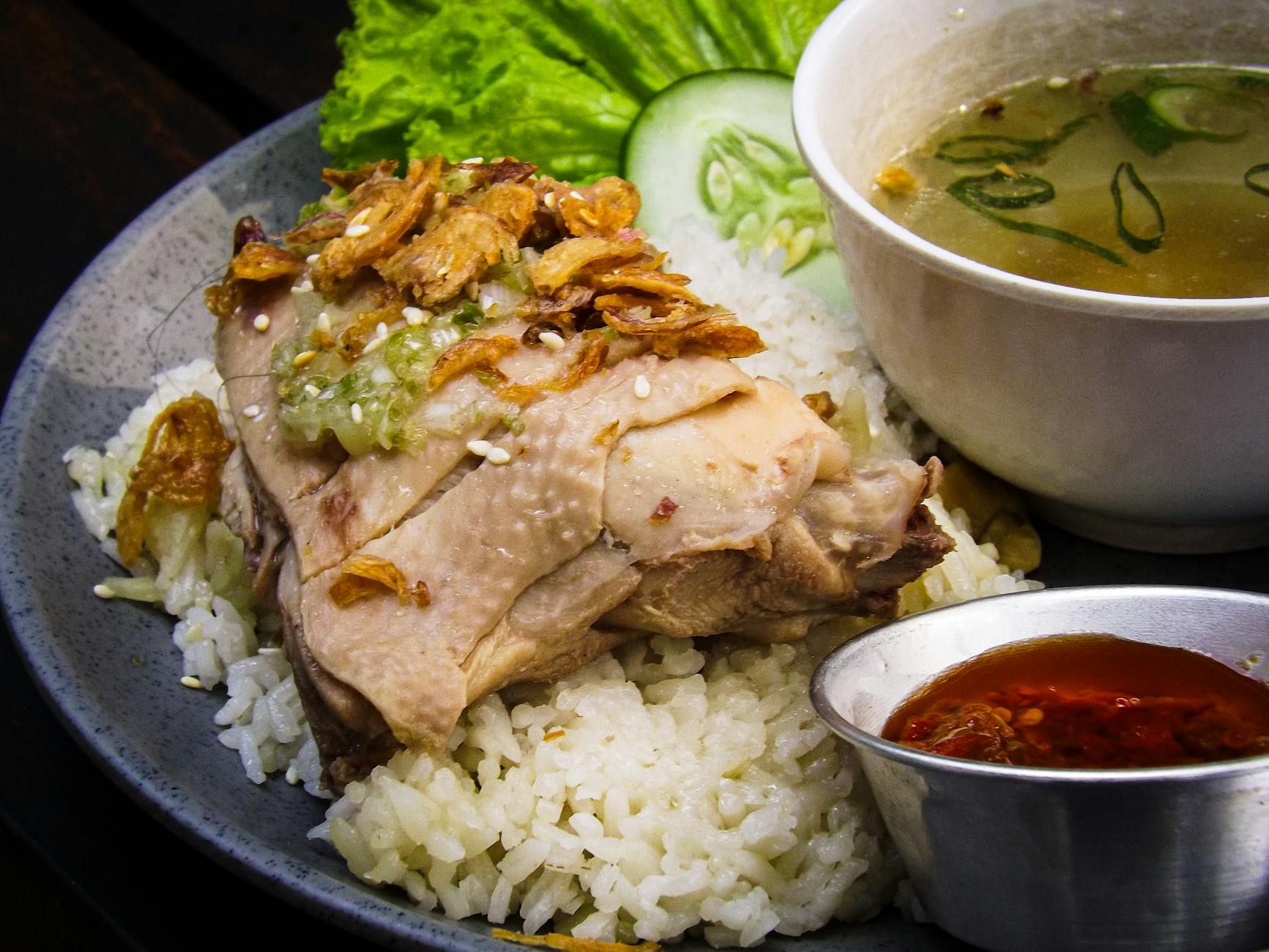
Hainanese Chicken Rice: Singapore’s National Dish Decoded
Singapore’s Iconic Dish Is Simpler Than It Looks
Poached chicken. Fragrant rice. Three sauces. That’s all there is to Hainanese chicken rice—yet Singaporeans argue about it like it’s life or death. Walk into any hawker center and you’ll hear passionate debates over which stall does it best. What seems like a basic plate of food is actually packed with technique. The difference between decent and mind-blowing chicken rice comes down to tiny details most people never notice.
This Singaporean staple has quietly conquered the world, popping up everywhere from Bangkok to London. But here’s what outsiders often miss: it’s not just chicken on rice. Every element has a purpose, working together like clockwork.
How Hainan’s Dish Became Singapore’s Obsession
Hainanese chicken rice didn’t start in Singapore. Early 20th-century immigrants brought the technique from China’s Hainan province. But Singaporean cooks made it their own, tweaking flavors and methods until something new emerged—the perfect example of how immigrant food becomes national heritage.
By the 1960s, chicken rice was practically Singapore’s edible flag. Today it battles laksa for the title of most iconic dish. Places like Tian Tian Hainanese Chicken Rice in Maxwell Food Centre have reached legendary status. People line up for hours. Arguments break out over who does it better. It’s serious business.
The Secret? Don’t Let the Water Boil
Here’s where things get interesting. That simple-looking poached chicken? It’s all about control. The water needs to stay at a precise simmer—never boiling—with ginger and scallions floating in it. Hit the right internal temperature and you get meat so tender it practically melts. Miss by a few degrees and it’s rubber city.
The rice is just as fussy. Cook it in the leftover chicken broth instead of water, and suddenly it’s fragrant and rich. Most home cooks skip the chicken fat and shallots—big mistake. That’s where half the flavor comes from.
Want to try making it? Use good-quality chicken. Keep that water between 65-75°C. And never, ever throw out the poaching liquid. These aren’t suggestions—they’re the rules.
Three Sauces, Endless Arguments
No chicken rice is complete without its sauce trio, which Singaporeans discuss like sports statistics. The chili sauce packs heat with fresh chilies and garlic. Soy-vinegar adds salty depth. Ginger paste cuts through the richness. Each one changes how the dish tastes.
This isn’t garnish territory. The sauces are built into the experience. Any place worth its salt serves them separately, letting you mix and match with every bite.
Why This Dish Matters
Hainanese chicken rice proves simple doesn’t mean easy. It demands perfect ingredients, exact timing, and respect for tradition. In a world of fancy fusion food, there’s something radical about a dish that refuses to change.
Whether you’re a Singaporean with strong opinions about hawker stalls or just someone who appreciates good food, this dish deserves a closer look. It’s the kind of meal that gets better the more you pay attention.