Tokyo
Tokyo Bangkok
 Seoul
Seoul Singapore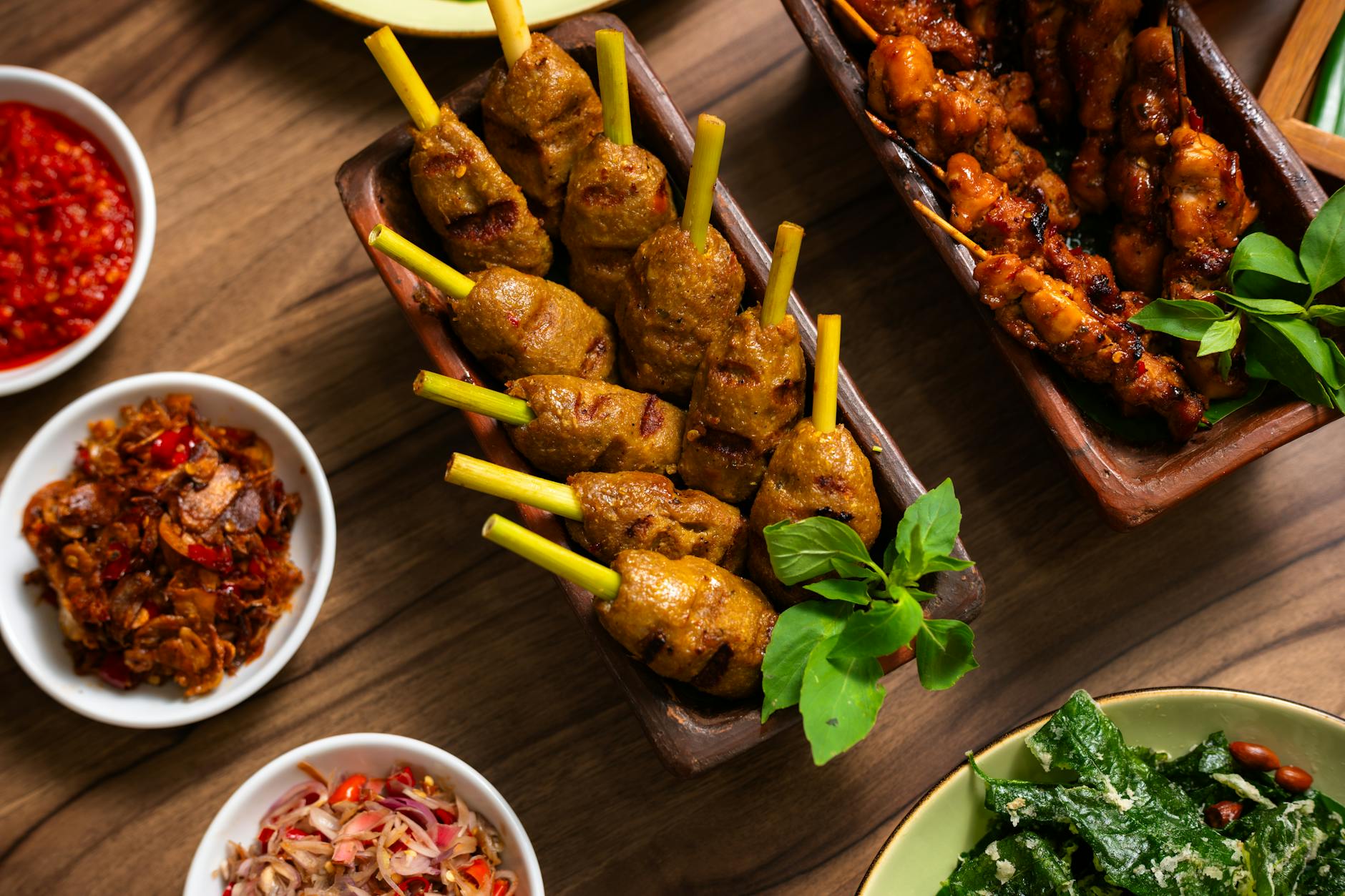
How Balinese Hindu Rituals Shape What Locals Actually Eat
At dawn in a Balinese village, women place palm-leaf squares filled with rice, flowers, and incense on doorsteps and temple gates. These canang sari offerings aren’t for show—they shape how locals eat. What’s on a family’s table depends on what the gods receive first, the calendar’s demands, and upcoming ceremonies. In Bali, eating is never just about food.
The Offering System That Determines Daily Meals
Food connects every Balinese household to their gods. Rice gets offered before anyone eats. Chicken gets shared with spirits before becoming dinner. This isn’t symbolism—it’s daily life. Offerings mix white rice, turmeric-yellow rice, red rice (colored with tomato or chili), sometimes shrimp paste, always flowers and incense. Each color represents spiritual directions. In Ubud and nearby villages, families prepare these before breakfast. Cooking becomes a dance between worlds. Leftover offerings feed people or animals—nothing gets wasted. Meals need rice to feel complete, spiritually and physically. What’s cooked depends on temple needs, creating an eating rhythm outsiders often miss.
Ceremony Menus That Override Everyday Cooking
When Galungan and Kuningan come around, normal meals vanish. Families make jaja laklak (green rice cakes), tipat cantok (rice cakes with peanut sauce), and pork satay—not because they’re hungry, but because they must. In Gianyar village, women spend days preparing lawar (minced meat with coconut and spices) for guests and temples. Odalan ceremonies have their own required dishes. Brayat Agung temple in Denpasar serves specific traditional foods. Nobody checks recipes—they know by heart what each event requires. What people eat changes with the moon, not their cravings.
Ingredients Reserved for Spiritual Use
Some ingredients serve the spirits first. Turmeric cleanses. Black rice appears in offerings before meals. Coconut carries sacred meaning. Denpasar and Sanur market sellers know who’s shopping for ceremonies versus dinner—they’ll recommend different items accordingly. Pork matters most in offerings and temple feasts, making it pricey and special. Families eat less meat than you’d think—much gets saved for rituals. Protein choices follow the ceremonial calendar. Even base gede spice paste changes based on purpose—family meals and temple offerings use different versions. Cooking here means juggling three skills: feeding people, honoring gods, and marking ceremonies.
When eating with Balinese families, notice what’s served and when. Ask about the calendar. Nothing on that table is random—it’s there because the gods came first. That’s real Balinese food.