Tokyo
Tokyo Bangkok
 Seoul
Seoul Singapore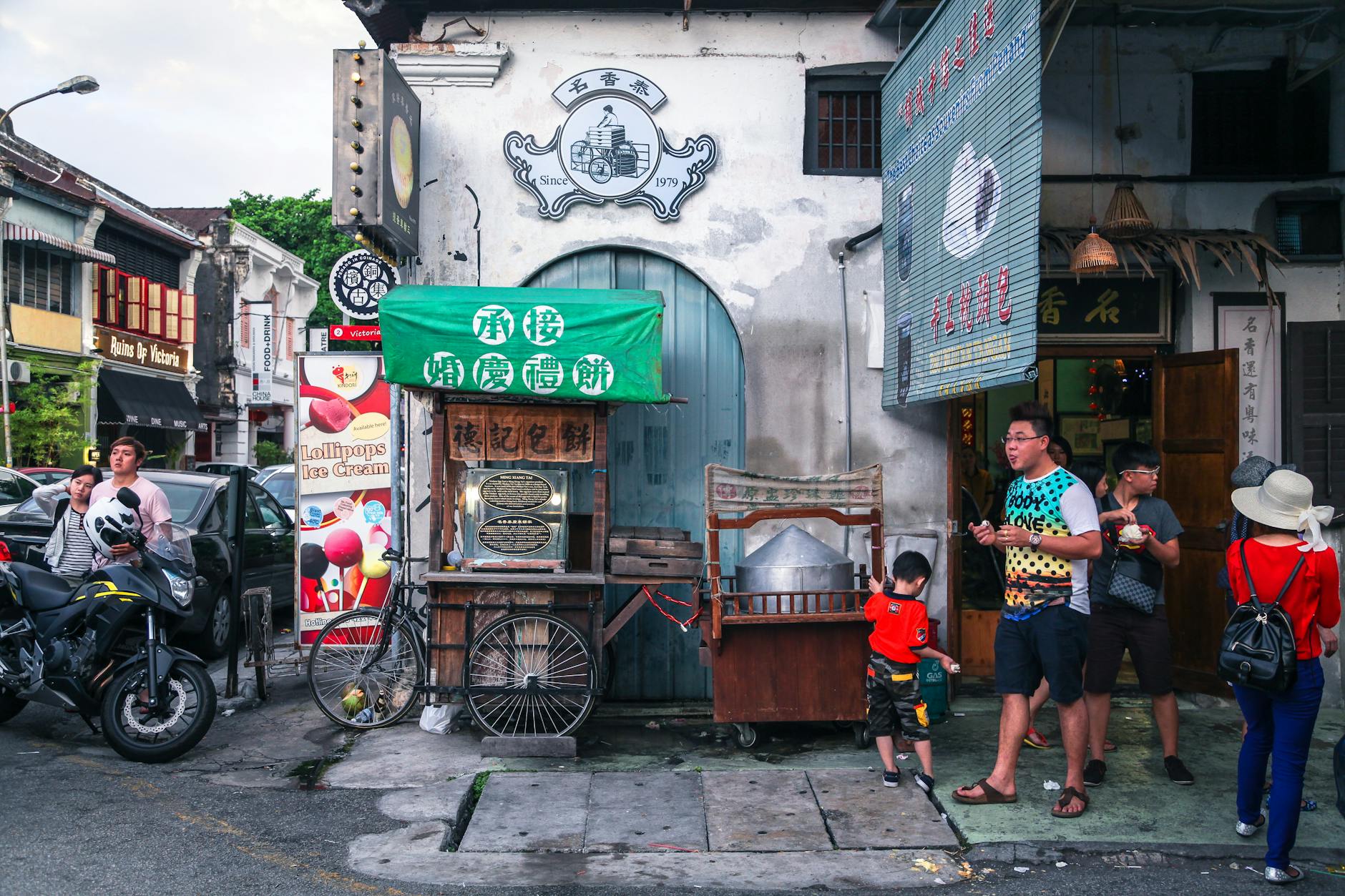
Why Penang is Malaysia’s True Food Capital: A Hawker’s Guide
A hawker in Georgetown’s Lebuh Chulia stall flipped char kway teow one-handed while ladling gravy with the other—no wasted movement. That’s Penang in a nutshell: food isn’t just served here, it’s how the city functions.
Three Communities, One Incredible Food Scene
Penang’s food dominance stems from geography and history. Chinese, Indian, and Malay communities didn’t just live side by side—their kitchens collided daily. One hawker center might have a Hokkien noodle stall beside Tamil roti canai and Malay laksa, all sharing customers. Unlike Kuala Lumpur where cuisines stay separate, Penang’s versions borrow freely. Assam fish curry techniques sneak into laksa. Chinese wok skills transform Malay dishes. Competition keeps standards brutal—mess up your char kway teow and customers just walk to the next stall.
Hawker Centers Where Technique Actually Matters
Penang Road and Campbell Street hawker centers operate like culinary boot camps. Locals fuel up here before work. Some stalls have perfected single dishes for generations. Watch a char siu pau maker work—the dough fold, the steam timing, the finger-test for filling temperature. This knowledge lives in hands, not recipe books. Proper equipment matters too: roaring wok fires, hand-pulled noodles at dawn, ingredients from suppliers who know each stall’s exact needs. Low rents mean hawkers compete on quality alone. That laksa broth simmers eight hours because anything less gets noticed instantly.
Ingredients You Can’t Find Elsewhere
Chowrasta Market and Jalan Masjid India wet markets stock what local hawkers demand—fresh turmeric, specific chili varieties, exact fish types for laksa. Suppliers and cooks work in sync. This creates a cycle: better ingredients enable better dishes, which draw more customers, which funds even better ingredients. Try recreating Penang laksa elsewhere and it’ll taste off—not from poor technique, but missing foundational elements. The fish paste acidity, spice balance, coconut milk thickness—Penang’s supply chain has perfected these details over lifetimes.
Visiting? Skip restaurants. Hit hawker centers at dawn. Order whatever construction workers are eating—that’s the real benchmark. The best meals come unannounced, served fast on plastic plates.