Tokyo
Tokyo Bangkok
 Seoul
Seoul Singapore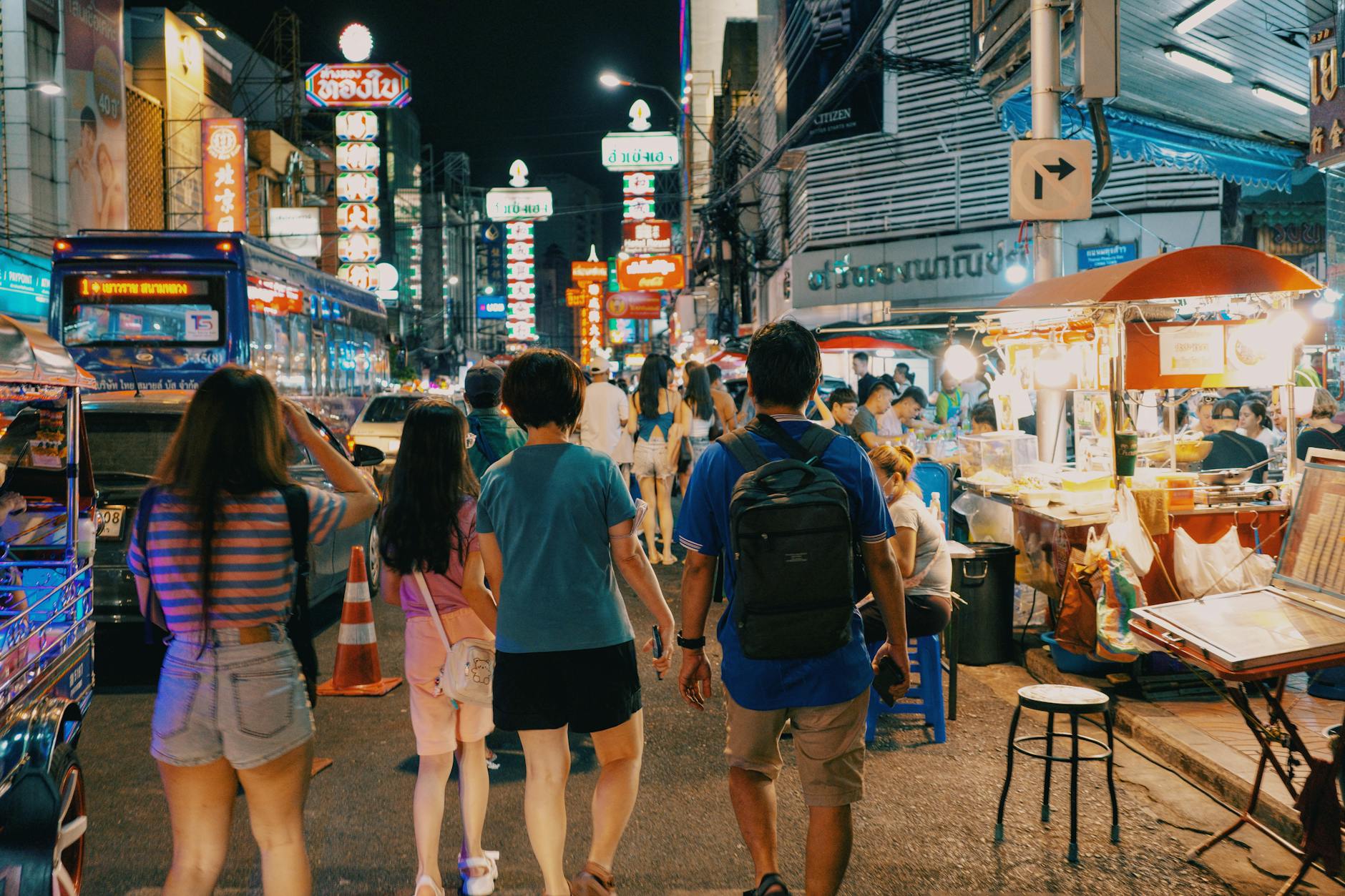
Skip These Bangkok Food ‘Classics’ — Here’s Where to Actually Eat
You’re eating the worst version of Thai food in the world, and you’re paying tourist prices to do it.
I say this with love, but after eight trips through Bangkok, I’ve watched enough visitors sit down at neon-lit tourist trap restaurants on Khao San Road and Wonder Why Thai Food Isn’t As Good As Their Local Thai Place at home. Here’s the brutal truth: you’re not eating Thai food. You’re eating the memory of Thai food, filtered through what some restaurant manager thinks tourists want to eat.
Let me fix this for you.
The Bangkok Tourist Food Traps
Pad Thai on Khao San Road (Any Restaurant)
You know the ones: neon signs, laminated menus with pictures, a guy in a chef’s hat making pad thai in front of you like it’s a circus act. You’ll pay 180-250 baht for pad thai that tastes like it was made from a tourist-approved paste formula.
Actual pad thai—the kind Thais eat—is tangy, deeply savory, and almost aggressively simple. It’s made with tamarind pulp, not bottled concentrate. The tourist version is sweet, homogenized, and designed to not offend anyone’s palate, which means it offends everyone’s palate. And yes, it’s a street food, but that doesn’t mean it should come with a laminated menu and a sommelier smile.
Tourist-Menu Restaurants Near the Grand Palace
The Grand Palace is legitimately stunning. The food around it is legitimately terrible and aggressively expensive. You’ll find restaurants with English-language menus, photos of every dish, and prices marked up 400% from what locals pay three blocks away. A green curry here runs 250-350 baht. Same curry, two blocks over in a place with no signage? 80 baht.
These restaurants exist because they know you’re going to sit down, see "Thai Cooking Class" in the window, feel like you’re getting culture, and not ask questions. You’re not. You’re getting mediocre food at premium prices.
Boat Noodles as a Performance Art (Boat Noodle Shows)
There are legitimate boat noodle stalls in Bangkok—small, fast, delicious, run by people who’ve been making the same thing for 20 years. Then there are the "boat noodle experiences" in Chinatown where they’ve packaged it into a theatrical performance with lighting and crowds.
The noodles themselves might be decent, but you’re paying 180-220 baht for what should cost 40-60 baht, and you’re eating it standing up while tourists take photos of you eating it. That’s not a meal. That’s performance art disguised as food.
Resort Hotel Thai Breakfast Buffets
I don’t need to name this one. You know exactly what I’m talking about. Lukewarm pad thai, watered-down curry, and fruit that’s been sitting under heat lamps since dawn. You’re paying 800+ baht for the buffet experience, not the food quality.
What the Locals Actually Eat
Or Tor Kor Market (Or Toc Market)
This is it. This is where Bangkok actually shops for food. Located in Chatuchak (near the weekend market), Or Tor Kor is a government-run market that’s been operating since 1910. The stalls here sell vegetables, fruit, prepared foods, and the kind of authenticity that can’t be performed.
Grab som tam (papaya salad) from any stall for 40-50 baht. Watch them pound it in the mortar right in front of you—it’s spicy, alive, and tastes like what som tam is actually supposed to taste like. Get grilled chicken from one of the permanent stalls. Get fresh coconut ice cream. You’ll spend 150-200 baht and eat better than you will at any tourist restaurant.
Yaowarat (Chinatown) After Dark
Yaowarat is Bangkok’s gold district and its food district, and between 6 PM and midnight, the narrow streets become open-air markets packed with locals eating from carts and small shopfront stalls. This is the real Bangkok.
Go to Yaowarat Road itself around Soi 10-15. Find the stalls selling boat noodles (the real ones, 40 baht), wonton noodles (50 baht), and grilled seafood. There’s a legendary stall on Yaowarat Road that’s been doing the same grilled fish cakes for 30 years—they’re charred, savory, and 30 baht for five pieces. You won’t find it on any app. You’ll find it because locals are crowded around it eating standing up at 8 PM on a Tuesday.
Victory Monument Street Food Clusters
Victory Monument is a Bangkok intersection that shouldn’t work as a food destination, but it does. Around the monument itself, there are clusters of permanent and semi-permanent food stalls that serve Bangkok office workers all day and night. No tourism signage. Prices are democracy-enforced—if they tried to charge tourists prices, locals would eat somewhere else.
There’s a khao man gai stall (poached chicken and rice) that does nothing but khao man gai, perfectly, for 50 baht. There are som tam carts. There’s grilled meat on skewers. There’s actual Thai street food at actual Thai prices.
The Reddit Consensus on Bangkok Food (What Repeat Visitors Say)
Skip the tourist-area restaurants entirely. The only Reddit posts from repeat Bangkok visitors that get traction are ones where people recommend going to neighborhoods where tourists don’t usually eat and just… eating what’s there.
Thonglor has good restaurants, but they’re restaurants for Bangkok residents, not Instagram backdrops. Ari has food stalls where locals eat breakfast. Ekkamai has noodle shops that have been in the same spot for decades.
The consistent advice: pick a neighborhood, walk around at meal time, watch where Thais are eating, sit down. You won’t find menus in English. You might point at what the person next to you is eating and nod. This is the way.
Your Bangkok Food Game Plan
1. Skip Khao San Road Entirely
There is nothing on Khao San Road that you cannot eat better and cheaper one block over. Treat it as a place to get drunk with other travelers, not a place to get food.
2. Eat Breakfast Like a Local
7-9 AM in any Bangkok neighborhood, eat what’s available: jok (rice porridge), khao tom (rice soup), or khao man gai. 40-60 baht. This sets the tone for understanding Thai food correctly.
3. Use Google Maps, But Filter for Thai-Only Menus
If the restaurant has a laminated English menu with photos, skip it. If the menu is only in Thai, sit down. The barrier to entry is the filter.
4. Go to Markets at Off-Peak Times
Or Tor Kor in the morning. Yaowarat after 6 PM. Victory Monument at lunch. You’re eating food made for locals, priced for locals.
5. One Exception: Gaggan (If You Want to Spend Money)
Look, most high-end Thai restaurants are restaurants where they serve Thai food to rich people. Gaggan is a restaurant where a Thai chef redefines what Thai food can be, and it’s legitimately worth it. It’s not tourist food pretending to be Thai. It’s Thai food that happens to be fancy. One meal. Eight courses. Dinner only. That’s your one fine-dining exception.
Closer
Bangkok’s best food isn’t hiding—it’s just not where tourists look, and that’s precisely why it’s still good.