Tokyo
Tokyo Bangkok
 Seoul
Seoul Singapore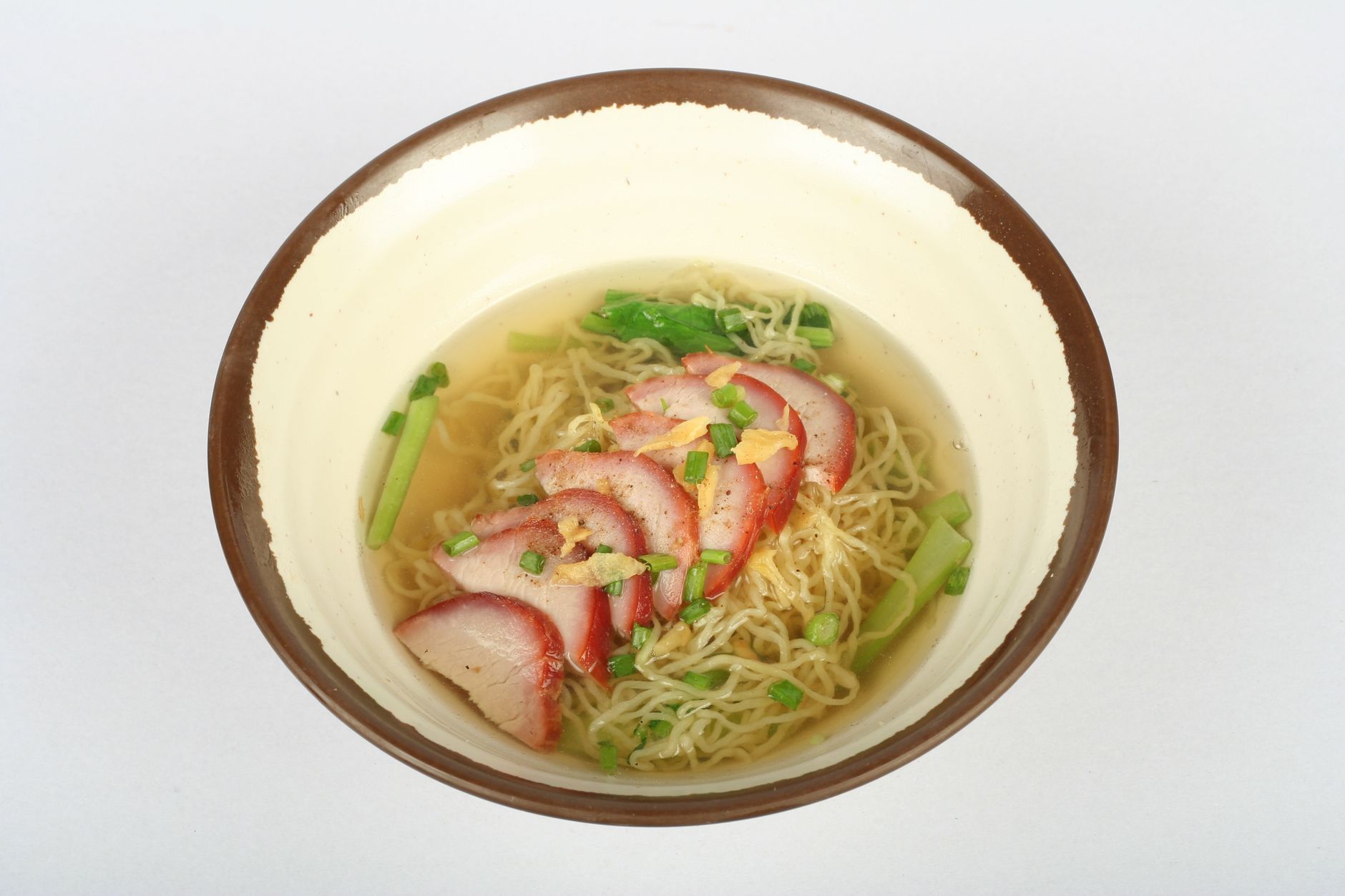
Char Siu: Origins, Technique, and Where to Eat It

Char siu—Cantonese roasted pork glazed with a mahogany-red coating of soy, sugar, five-spice, and fermented bean paste—is one of Asia’s most recognizable dishes, yet few outside professional kitchens understand why it tastes the way it does. The name itself means “fork roast” in Cantonese, a direct reference to the method: strips of pork hung vertically on metal forks inside a traditional charcoal oven, where direct radiant heat creates a caramelized exterior while the interior stays moist. It is the technique, not the ingredients alone, that defines char siu.
Origins and History
Char siu emerged from Guangdong province in southern China, though pinpointing an exact origin is complicated by centuries of migration and trade. The dish likely developed between the 16th and 18th centuries, when Portuguese traders arrived in Macau and introduced new cooking methods and ingredients—particularly the oven technology that was foreign to traditional Chinese wok-based cuisine. Roasting over open flame was known in China, but the vertical spit-roasting method that became iconic for char siu shows Portuguese influence.
Guangdong’s geography mattered: coastal access meant abundant pork, while the region’s merchant class had both wealth and exposure to foreign techniques. By the 19th century, char siu was already embedded in Cantonese food culture, appearing in tea houses as part of dim sum service. The dish spread through Chinese diaspora communities during the coolie trade era—laborers brought Cantonese cooking knowledge to Southeast Asia and North America. Hong Kong’s mid-20th century industrialization and urbanization cemented char siu as a working-class staple: cheap, protein-rich, and portable enough to eat on construction sites or in markets.
Regional Variations
While char siu shares a core identity across Guangdong, Hong Kong, Macau, and Singapore, notable variations exist. Hong Kong versions tend toward a darker, more caramelized glaze with assertive sweetness—a post-war aesthetic preference reflecting sugar availability and modern taste profiles. The char, or char (burnt crust), is deeper and more pronounced. Macau’s version, influenced by Portuguese culinary traditions and nearly 400 years of colonial cooking exchange, sometimes incorporates wine or madeira into the marinade, adding subtle fermented undertones absent in mainland versions.
Singapore’s char siu reflects both Cantonese technique and local adaptation: the meat is often cut into thinner slices, the sauce may incorporate local soy varieties, and it appears more frequently in chicken form (chicken char siu, or siu gai) than in Guangdong proper. The sauce in Singapore tends to be less aggressively sweet, calibrated to local preference and the prevalence of mixing char siu with rice and light broths rather than eating it as a standalone item.
Guangzhou (Canton) itself maintains a more austere approach: less sugar, more fermented character, longer marination times. Some traditional roasters still use charcoal ovens rather than gas, which produces measurably different flavor profiles due to uneven heat distribution and smoke infusion.
What Makes a Great Char Siu
The ingredient list is deceptively simple: pork shoulder or belly, soy sauce, oyster sauce, hoisin sauce, fermented bean paste (doubanjiang), five-spice powder (star anise, clove, cinnamon, Sichuan pepper, fennel), rock sugar, garlic, ginger, and sometimes rice wine or honey. The surprise factor is how little separates good char siu from mediocre versions—it often comes down to three variables that restaurants don’t advertise.
First: marinade time. Rushed char siu (marinated less than 4 hours) tastes surface-level, the glaze sitting on meat rather than integrated into it. The best char siu marinade penetrates the meat for 12-24 hours, allowing salt and enzymes to subtly denature proteins and enable deeper seasoning absorption. Second: oven temperature consistency. Home cooks and lesser restaurants often roast at too-low temperatures, resulting in pale, rubbery meat. Proper char siu roasts at 200-220°C (390-430°F), hot enough that the glaze caramelizes and proteins develop a crust in roughly 20-30 minutes per batch.
Third—and counterintuitively—is texture variance. Inferior versions use only pork shoulder (lean) or only belly (fatty). The best char siu uses both cuts, sometimes in a single piece: the shoulder provides structure and lean protein, the belly renders fat that basts the meat and ensures moisture. Some traditional roasters use pork jowl (face meat), which has unique collagen properties that add silkiness.
The marinade’s balance matters profoundly. Fermented bean paste provides umami and salinity; hoisin adds sweetness and depth; five-spice contributes warmth without heat. Excessive sugar masks rather than enhances. Great char siu tastes salty-sweet-savory in near-equilibrium, not candy-adjacent.
Where to Try Char Siu: City by City
Hong Kong: Central, Sheung Wan, and Mong Kok remain the epicenters. Siu mei (roasted meat) shops cluster on narrow streets—look for storefronts with hanging duck and pork visible behind glass. Yat Lok Roast Goose (Central) and Kam’s Roast (multiple locations) are institution-level. Cha Chan Tengs (Hong Kong-style tea houses) serve it reliably alongside rice and bok choy. The Admiralty MTR corridor and Temple Street Night Market in Mong Kok offer more casual options. Expect to pay HK$25-45 (USD $3.20-5.70) for a lunch plate.
Macau: Portuguese-influenced char siu appears around Taipa and in the historic inner harbor. Larger hotels often offer versions that reflect Macanese fusion; street food versions remain truer to Cantonese foundations. Rua do Cunha in Taipa is the primary eating street. Macau siu mei shops often sell by weight (MOP $35-50 per 100g, roughly USD $4.30-6.15). Quality tends toward higher-end restaurant presentations rather than casual stalls.
Singapore: Char siu appears throughout Chinatown (Pagoda Street, Smith Street), Tiong Bahru, and inside hawker centers like Lau Pa Sat and Maxwell Food Centre. Singapore versions are frequently served chopped and mixed into noodle soups or over rice. Standalone char siu plates run SGD $4-8 (USD $3-6). The chicken variant is more prevalent here than elsewhere, often at lower price points (SGD $2.50-4).
Price Guide
Price correlates heavily with location type (hawker vs. restaurant vs. hotel) and meat quality. Hong Kong siu mei shops: HK$25-45 per portion. Hong Kong mid-range restaurants: HK$60-120. Michelin-listed char siu experiences: HK$250+. Macau street food: MOP $35-65 per 100g. Macau restaurants: MOP $80-180. Singapore hawker centers: SGD $3-6. Singapore restaurants: SGD $12-25. Premium versions in any city incorporate heritage breeds or extended aging (48-72 hours), which increases cost by 30-50%.
Char siu represents the intersection of Chinese culinary technique, colonial-era trade history, and urban working-class food culture—a dish that tastes simple because its complexity has been refined across centuries into essential components. It endures because the method, not fashion, determines quality.