Tokyo
Tokyo Bangkok
 Seoul
Seoul Singapore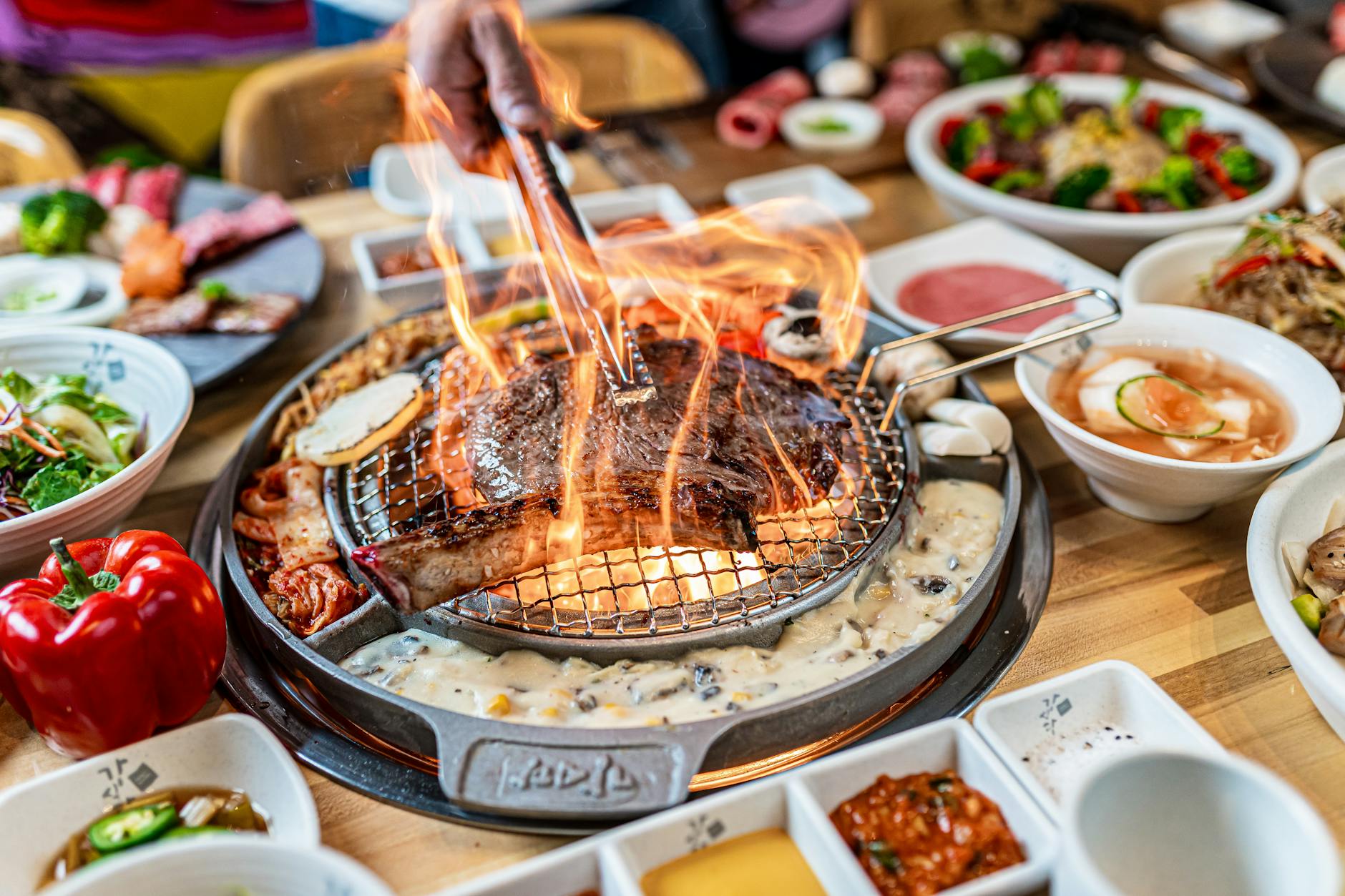
Korean BBQ vs Japanese Yakiniku: Table Grill Showdown
The moment you step into Seoul’s Gangnam district, the air smells like charcoal smoke and sizzling beef fat. A street vendor flips thick hanwoo strips on a sunken grill while diners bundle the meat in perilla leaves with spicy sauces. Head to Tokyo’s Shinjuku, and you’ll see meat cooking over flames too. But take one bite of the same cut in both cities, and the differences between these grilling traditions become obvious.
The Grill Setup: Sunken vs. Elevated
Korean BBQ joints in Busan or Seoul all share one thing: grills built into the tables. Smoke gets pulled downward, away from your face. The meat sits close to the heat, developing a dark crust while staying rare inside. Japanese yakiniku takes the opposite approach. Grills sit on top of the table, often with a small hood. Smoke hangs around longer. The heat is lower, more precise. In Osaka, chefs treat each piece like delicate sashimi—constantly moving it to avoid overcooking. Korean BBQ? You’re in charge. Char is expected, even encouraged.
Meat Selection and Marinades: Boldness vs. Subtlety
Korean BBQ doesn’t hold back. Bulgogi comes soaked in soy, pear, and garlic. Galbi ribs get a spicy gochugaru rub. These flavors demand attention, especially when wrapped in lettuce with a swipe of gochujang. Yakiniku plays it quieter. Wagyu arrives unmarinated, maybe just salted. The fat should speak for itself. A dip in tare sauce or a squeeze of lemon is all it needs. In Kobe, a single piece of A5 wagyu might cook for 20 seconds per side—any sauce would ruin it.
The Social Dynamic: DIY Energy vs. Grill Master Theater
Korean BBQ is hands-on chaos. You grill, you assemble, you argue about doneness. It’s loud and democratic. Yakiniku leans into expertise. At high-end spots, a grill master handles everything. You watch, you learn, you eat what they serve. Both styles work—they just fit different moods. Want control and big flavors? Go Korean. Want to sit back and trust the pros? Go Japanese. Or skip the choice and try both. Same concept—meat plus fire—but two totally different experiences.