Tokyo
Tokyo Bangkok
 Seoul
Seoul Singapore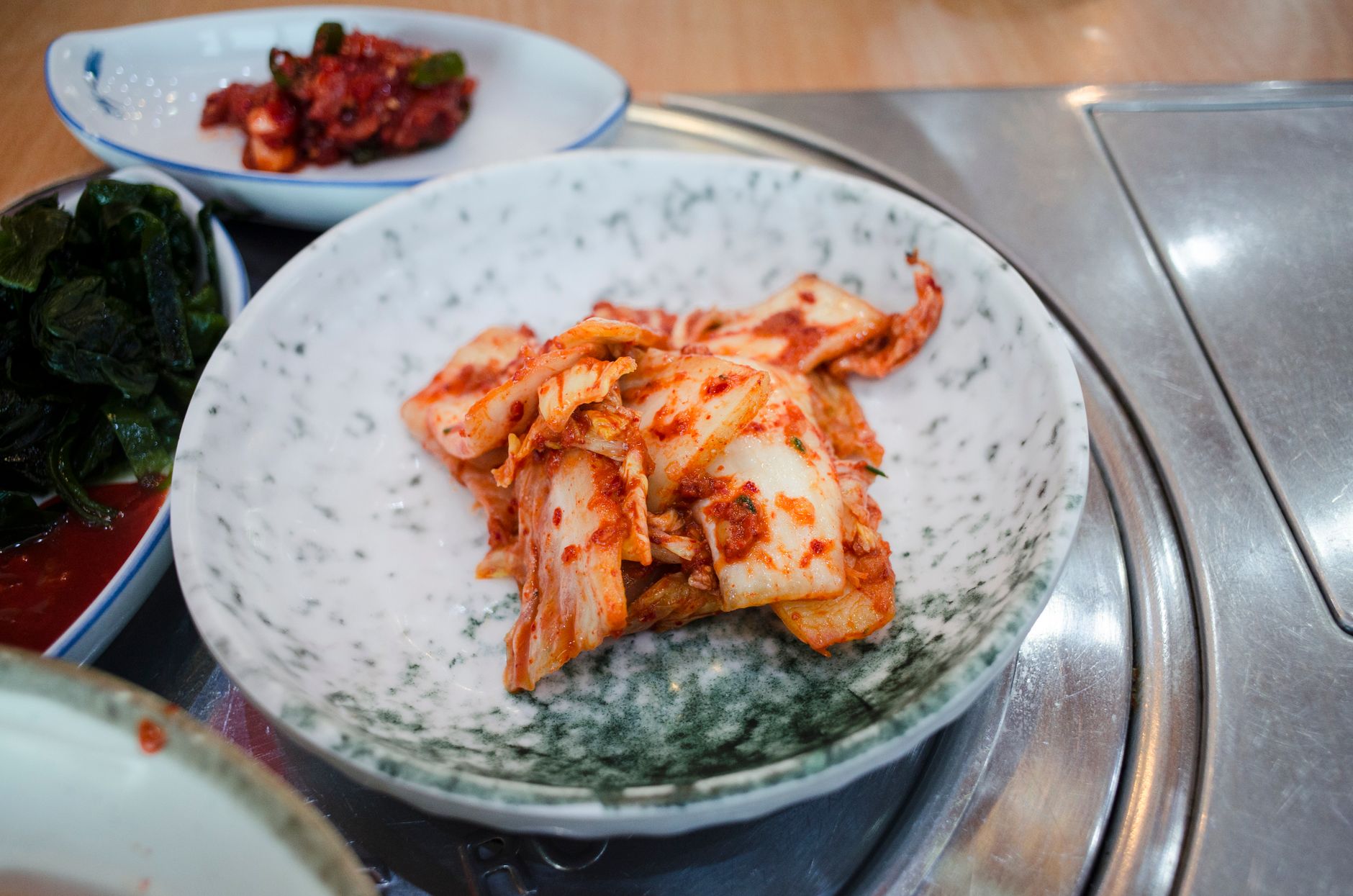
Korean Menu Decoder: Common Dishes & Terms Explained
Korean menus can be intimidating walls of unfamiliar syllables, but knowing just a dozen core terms unlocks most restaurant menus across the country. The single most useful thing to understand: many dish names simply describe the cooking method plus the main ingredient, so “bulgogi” is fire (bul) + meat (gogi), and suddenly the menu starts to make sense.
Essential dishes
| Term | Script | What it is |
|---|---|---|
| Bibimbap | 비빔밥 | Rice bowl topped with vegetables, egg, meat, and gochujang (chili paste); mixed before eating |
| Bulgogi | 불고기 | Thinly sliced beef marinated in soy sauce, sugar, and sesame oil, then grilled |
| Galbi | 갈비 | Marinated beef or pork short ribs, usually grilled at the table |
| Japchae | 잡채 | Stir-fried sweet potato glass noodles with vegetables and sometimes meat |
| Jjigae | 찌개 | Thick, hearty stew served bubbling hot; varieties include kimchi, tofu (sundubu), and soybean paste (doenjang) |
| Kimchi | 김치 | Fermented vegetables (usually napa cabbage) with chili, garlic, and ginger; served as banchan or in dishes |
| Naengmyeon | 냉면 | Cold buckwheat noodles in icy broth or spicy sauce; summer favorite |
| Samgyeopsal | 삼겹살 | Thick slices of pork belly grilled at the table, wrapped in lettuce with ssamjang (dipping paste) |
| Tteokbokki | 떡볶이 | Chewy rice cakes in sweet-spicy gochujang sauce; street food staple |
| Kimbap | 김밥 | Rice and fillings rolled in seaweed, sliced into rounds; Korea’s answer to sushi rolls but not vinegared |
Cooking methods & terms
| Term | Meaning |
|---|---|
| Gui (구이) | Grilled or roasted; appears in meat dishes like bulgogi and grilled fish (saengseon-gui) |
| Bokkeum (볶음) | Stir-fried; seen in dishes like kimchi-bokkeum (stir-fried kimchi) or ojingeo-bokkeum (spicy stir-fried squid) |
| Jjim (찜) | Steamed or braised; used for dishes like galbijjim (braised short ribs) or gyeranjjim (steamed egg custard) |
| Tang (탕) | Soup, typically lighter and clearer than jjigae; examples include galbitang (short rib soup) and seolleongtang (ox bone soup) |
| Jeon (전) | Pan-fried items, usually battered; includes vegetable pancakes (pajeon) and kimchi pancakes |
| Muchim (무침) | Seasoned or mixed cold dishes; spinach muchim is a common banchan |
| Jorim (조림) | Simmered in sauce; fish or tofu cooked down with soy-based liquid until glossy |
| Banchan (반찬) | Small side dishes served automatically with meals; refills are usually free |
How to order
- Most restaurants specialize in one type of dish, so the menu may be short—don’t expect extensive variety at a samgyeopsal spot
- Dishes marked “maeun” (매운) are spicy; request “deol maepge” for less spice or “an maepge” for not spicy
- Grilled meat orders are typically portioned per person (1-inbun = one serving); minimum orders of two servings are common
- Rice (bap) and banchan come with most meals but may need to be ordered separately at some casual spots; just ask for “bap juseyo”
- At table-grill restaurants, staff often help cook the meat initially—watch and follow their lead rather than diving in immediately
FAQ
Is Korean food always spicy?
No. Many classic dishes contain no chili at all—galbi, japchae, seolleongtang, and kimbap are all mild. Gochujang and gochugaru (chili flakes) appear frequently, but plenty of options exist for those avoiding heat.
Are there vegetarian options?
Traditional Korean cuisine relies heavily on seafood-based broths and fish sauce even in vegetable dishes. Temple food (사찰음식, sachal eumsik) restaurants offer genuinely plant-based menus. Otherwise, bibimbap without meat and various banchan can work, but confirm preparation methods.
What’s the one dish to try first?
Bibimbap gives a complete overview of Korean flavors—fermented, savory, slightly sweet, with texture contrasts—in a single bowl. It’s widely available, customizable for dietary needs, and representative of the balance that defines the cuisine.
Armed with these terms, any menu becomes less puzzle and more invitation—so which dish sounds worth ordering twice?