Tokyo
Tokyo Bangkok
 Seoul
Seoul Singapore
Bun Bo Hue: Vietnam’s Spicy Beef Noodle Soup Deserves Your Attention

Forget what you know about pho—bun bo hue is Vietnam’s underrated noodle soup hero. While pho dominates menus worldwide and banh mi steals the social media spotlight, this spicy, lemongrass-packed beef soup from central Vietnam deserves way more attention. Not that pho isn’t great. But one dish shouldn’t hog the whole culinary spotlight.
Why Hue’s Soup Stands Apart
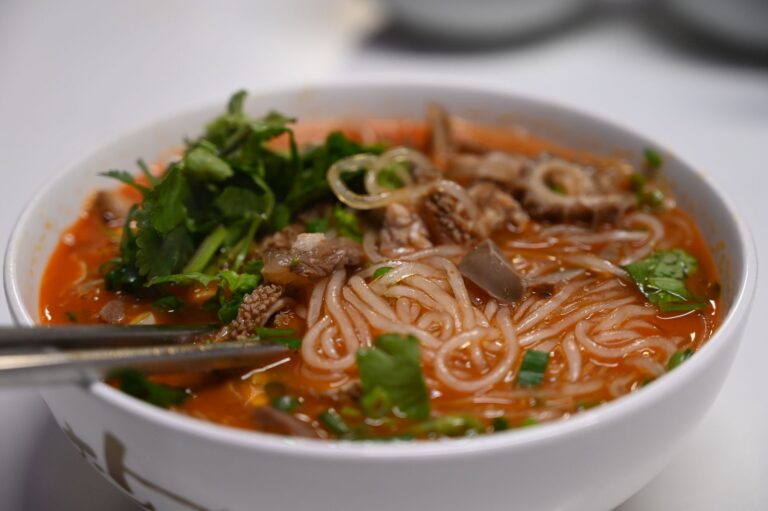
Bun bo hue was born in Hue, Vietnam’s old imperial capital. Royal kitchens and local ingredients shaped its bold flavors. Unlike pho’s simpler northern roots, this soup packs layers—slow-simmered beef bones, oxtail, and funky shrimp paste create a broth with serious depth. In Hue, shops along Nguyen Sinh Street serve versions so good, locals argue over who does it best. The bowl’s a textural playground: tender brisket, springy meatballs, sometimes pork knuckle or blood cake. Every bite’s different.
Spice That Actually Means Something
This isn’t pho’s gentle warmth. Annatto seeds and chili oil give bun bo hue its rusty hue and proper kick—not just heat, but flavor with purpose. Lemongrass cuts through, keeping things bright. Those herb plates? Not decoration. Thai basil, mint, and cilantro are crucial for balancing the rich broth. The noodles matter too—thinner than pho’s, they soak up every spicy, citrusy drop.
Where To Find The Good Stuff Abroad
London’s got spots in Hackney and Elephant & Castle, but quality’s hit-or-miss. Melbourne does better—Saigon Pearl in Footscray nails the broth’s depth. In the U.S., Orange County and Houston Vietnamese joints often get it right, though many chains still ignore it entirely. The trick? Ask for it by name. Kitchens notice when you skip the usual pho order. When you find a place that simmers its broth all day, you’ll get why this soup should be as famous as its milder cousin.
Next Vietnamese meal? Go for the bun bo hue. It’s a flavor wake-up call—and proof that Hue’s culinary pride runs deep.