Tokyo
Tokyo Bangkok
 Seoul
Seoul Singapore
Thai Palace Cooking: The Secret Behind Your Favorite Restaurant Dishes
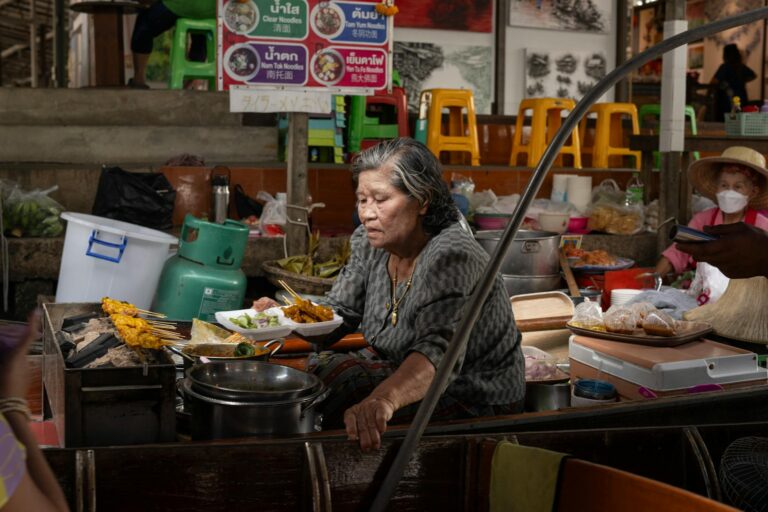
Chatuchak Market in Bangkok hits you with smells before anything else—not just the usual pad thai scents, but the funk of nam pla and fermented shrimp paste drifting from a corner stall. Watch the vendor pound som tam and it clicks: this isn’t just street food. It’s royal technique, served to anyone with 40 baht. The mortar’s rhythmic thuds, the careful balance of heat and sour, the exact moment she stops crushing—these skills were born in palace kitchens.
Here’s what most Western diners miss: that Thai menu in London or Sydney isn’t just regional dishes. It’s the result of centuries where kings treated cooking as high-stakes diplomacy and culinary innovation as a flex of power.
When Kings Employed Hundreds of Cooks to Compete
Thai royal cuisine wasn’t born from scarcity. It came from extravagance. During Ayutthaya (1351-1767) and the Chakri Dynasty, kings kept massive kitchen brigades—dozens of cooks, each mastering one dish. These weren’t kitchens. They were R&D labs. A cook might spend years perfecting gaeng massaman or carving vegetables into flowers that took half a day.
Palace kitchens ran on strict hierarchy. Master chefs (usually men) led teams working with ingredients hauled from across the kingdom and abroad. Chinese techniques blended with Indian spices and local know-how. Royals didn’t just eat—they ate to impress. State dinners were power moves, showcasing Thailand’s wealth through food.
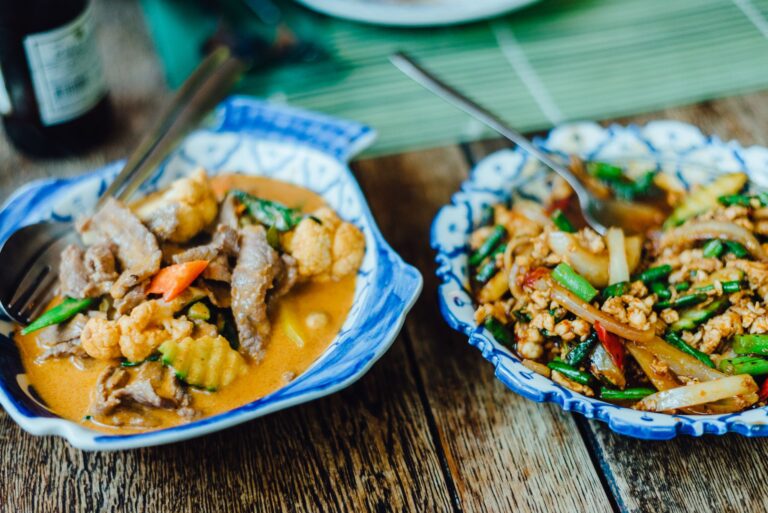
That pressure cooker birthed what you eat today. Gaeng phed (red curry) and gaeng kiaw wan (green curry) weren’t peasant inventions. They were honed over decades in palace kitchens, where mistakes got you demoted and wins earned bragging rights.
How Palace Techniques Became Restaurant Standards
Order curry at a decent Thai spot, and you’re tasting royal legacy. The paste-making drill—grinding chilies, galangal, lemongrass, shrimp paste to velvet—was perfected by palace cooks with top-tier mortars and zero deadlines. They knew texture mattered as much as flavor, that paste needed a specific smoothness.
Same goes for soups. Tom yum and tom kha gai aren’t poverty meals. They’re precise equations. Palace cooks built flavors in layers: aromatics first, proteins next, acids and heat last. That knowledge trickled down through generations trained by palace alumni.
Even today’s hole-in-the-wall spots follow these rules. Good cooks don’t wing curries—they stick to the centuries-old playbook. Mediocre vs great Thai food? It’s usually about who respects the old techniques.
Why This Matters to What You Order
Knowing this history changes how you judge Thai food. When a dish tastes off, it’s often because someone cut corners royal cooks proved you shouldn’t. Proper gaeng takes time. Curry paste needs to bloom. Coconut milk can’t be dumped all at once.
The best Thai joints—whether in Bangkok’s Silom or a Melbourne strip mall—get this. You taste the difference. There’s a purpose, a lineage tracing back to kings.
Next time you order Thai, ask: Does this taste like someone who gets it, or someone just following steps? That gap is palace cooking vs the rest. Aim for the first.