Tokyo
Tokyo Bangkok
 Seoul
Seoul Singapore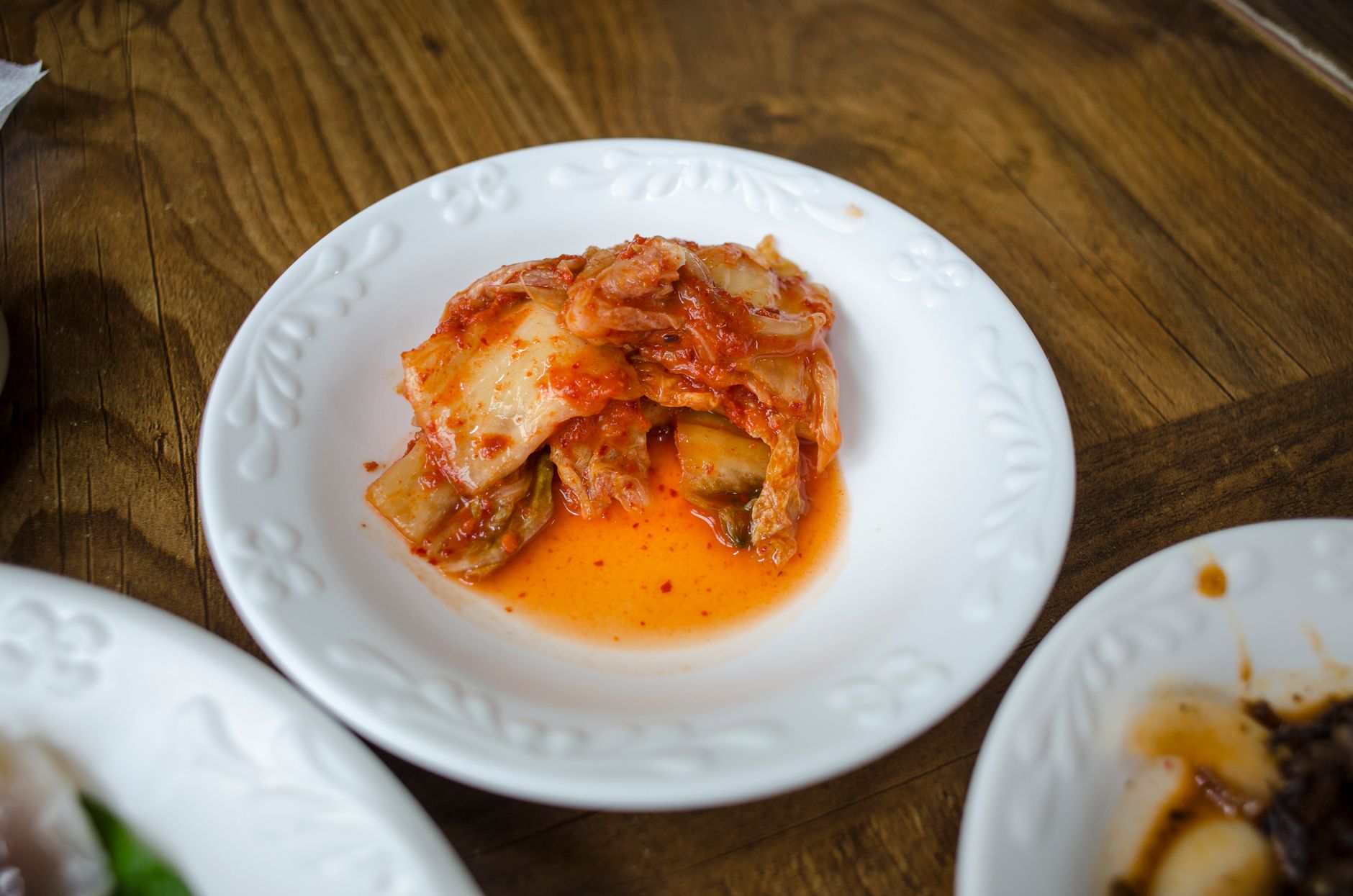
South Korea Food Guide for Beginners: What and How to Eat
New to South Korea and unsure how to eat your way through it? You’re in one of Asia’s most beginner-friendly food countries. Korea is safe, endlessly social, and built around sharing — and even the convenience stores turn out surprisingly good meals. The only thing standing between you and a great first trip is knowing what to order, how the grill-it-yourself tables work, and a few pieces of etiquette. This guide covers exactly that.
What to eat first: your starter 8
Korean food ranges from fiery stews to smoky tabletop barbecue. Nail these eight and you’ll have tasted the full spread.
| Dish | What it is | Rough price | Where to find it |
|---|---|---|---|
| Samgyeopsal (Korean BBQ) | Pork belly you grill at your own table with sides | ₩12,000–18,000/person | Dedicated BBQ restaurants |
| Bibimbap | Rice topped with vegetables, egg, and gochujang, mixed together | ₩8,000–12,000 | Everywhere; casual restaurants |
| Kimchi jjigae | Bubbling sour-spicy kimchi stew with pork or tofu | ₩7,000–9,000 | Bunsik and home-style diners |
| Tteokbokki | Chewy rice cakes in sweet-spicy sauce — the classic street snack | ₩3,000–5,000 | Street stalls, bunsik shops |
| Korean fried chicken | Double-fried, extra-crispy chicken, often with beer (chimaek) | ₩18,000–22,000 | Chicken shops, delivery |
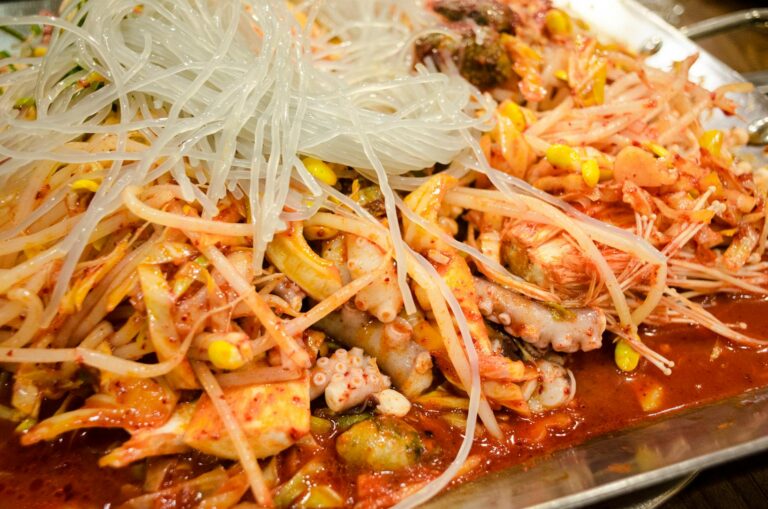
| Japchae | Sweet-savory glass noodles stir-fried with vegetables | ₩7,000–10,000 | Casual restaurants, markets |
| Gimbap | Seaweed rice roll with fillings — cheap, portable, filling | ₩3,000–4,500 | Gimbap chains, convenience stores |
| Sundubu jjigae | Silky soft-tofu stew, served bubbling with a raw egg to stir in | ₩8,000–10,000 | Casual stew houses |
How to order: the part first-timers fear (and shouldn’t)
- Korean BBQ — you cook it. Order the meat by the portion (usually 2-serving minimum), and staff bring it raw with scissors and tongs. Grill it yourself, snip it into pieces, wrap in lettuce with garlic and ssamjang. Staff will help if you look lost.
- Banchan is free — and refillable. The little side dishes (kimchi, beansprouts, pickles) come automatically and are refilled at no charge. Just ask or point to the empty dish.
- Call the staff. You’re expected to. Press the table call button, or say “jeogiyo!” (excuse me). Waiting quietly gets you nowhere.
- Convenience stores (GS25, CU, 7-Eleven) are a legit meal: grab a lunchbox, microwave it in-store, add a cup ramyeon. Staff will scan and you tap to pay.
- Pojangmacha (street food tents) — point at what you want; most is priced per piece or bowl.
Facing a menu with no pictures? Our Korean Menu Decoder translates the terms you’ll actually see.
Etiquette: the do’s and don’ts
- ✅ Let elders start. If you’re eating with older Koreans, wait for the eldest to lift their spoon first.
- ✅ Use two hands when pouring or receiving a drink from someone older — a key sign of respect.
- ✅ Rice and soup with the spoon; sides with chopsticks. Koreans use a spoon far more than in other Asian cuisines.
- ❌ Don’t lift your rice bowl off the table to eat — unlike in Japan or China, it stays down.
- ❌ Never stick chopsticks upright in rice.
- ❌ Don’t tip. It isn’t expected anywhere.
Is it safe? Hygiene and water
- Korea is very safe to eat in, with strict hygiene standards even at street stalls.
- Tap water is technically drinkable, though most locals drink filtered or bottled water; restaurants provide free purified water.
- Street food is cooked to order at busy, high-turnover stalls — a good sign.
What a day of eating actually costs
| Meal | Local-style option | Cost |
|---|---|---|
| Breakfast | Convenience-store gimbap + coffee | ₩4,000–6,000 |
| Lunch | Bibimbap or a stew set | ₩8,000–12,000 |
| Dinner | Korean BBQ or fried chicken to share | ₩15,000–22,000 |
| Typical day | ₩27,000–40,000 (~$20–30) |
Eating solo? Bunsik (snack shops) and gimbap chains are cheap, fast, and welcoming for one.
Eating with dietary restrictions
- Vegetarian / vegan: Trickier than it looks — anchovy or beef stock hides in many “vegetable” dishes and kimchi often contains fish sauce. Temple food (sachal eumsik) and dedicated vegan spots in Seoul are your best bet.
- Halal: Growing, especially around Itaewon in Seoul, which has halal-certified Korean restaurants and a mosque.
- Allergies: Sesame, soy, and shellfish are common — carry a translation card.
Where to eat: the types of places
- BBQ houses — the social heart of Korean dining.
- Bunsik shops — cheap snack spots for tteokbokki, gimbap, and fried extras.
- Pojangmacha — street tents for late-night food and drinks.
- Traditional markets — Gwangjang (Seoul) for bindaetteok and mayak gimbap; Myeongdong for street snacks.
- Convenience stores — a genuine, cheap meal option.
Survival phrases
| Korean | Romanization | Meaning |
|---|---|---|
| 저기요 | Jeogiyo | Excuse me / to call staff |
| 이거 주세요 | Igeo juseyo | This one, please |
| 계산해 주세요 | Gyesanhae juseyo | The bill, please |
| 맛있어요 | Masisseoyo | Delicious |
| 안 매워요? | An maewoyo? | Is it not spicy? |
| 감사합니다 | Gamsahamnida | Thank you |
Avoiding tourist traps
- Step off the main tourist drags in Myeongdong and Hongdae — the stalls and restaurants one street back are cheaper and often better.
- Check prices at seafood and pojangmacha tents aimed at tourists before ordering — a few inflate “market price.”
Before you fly — and when you land
Most trips start and end at Incheon. Our Incheon Airport food guide shows where to grab a proper Korean meal before takeoff.
You’re ready
That’s all you need. Grill your own pork belly, refill the banchan, call the staff loudly, and skip the tip. When you want to go deeper, explore more Korean food guides — every pick verified against real Google Maps ratings.