Tokyo
Tokyo Bangkok
 Seoul
Seoul Singapore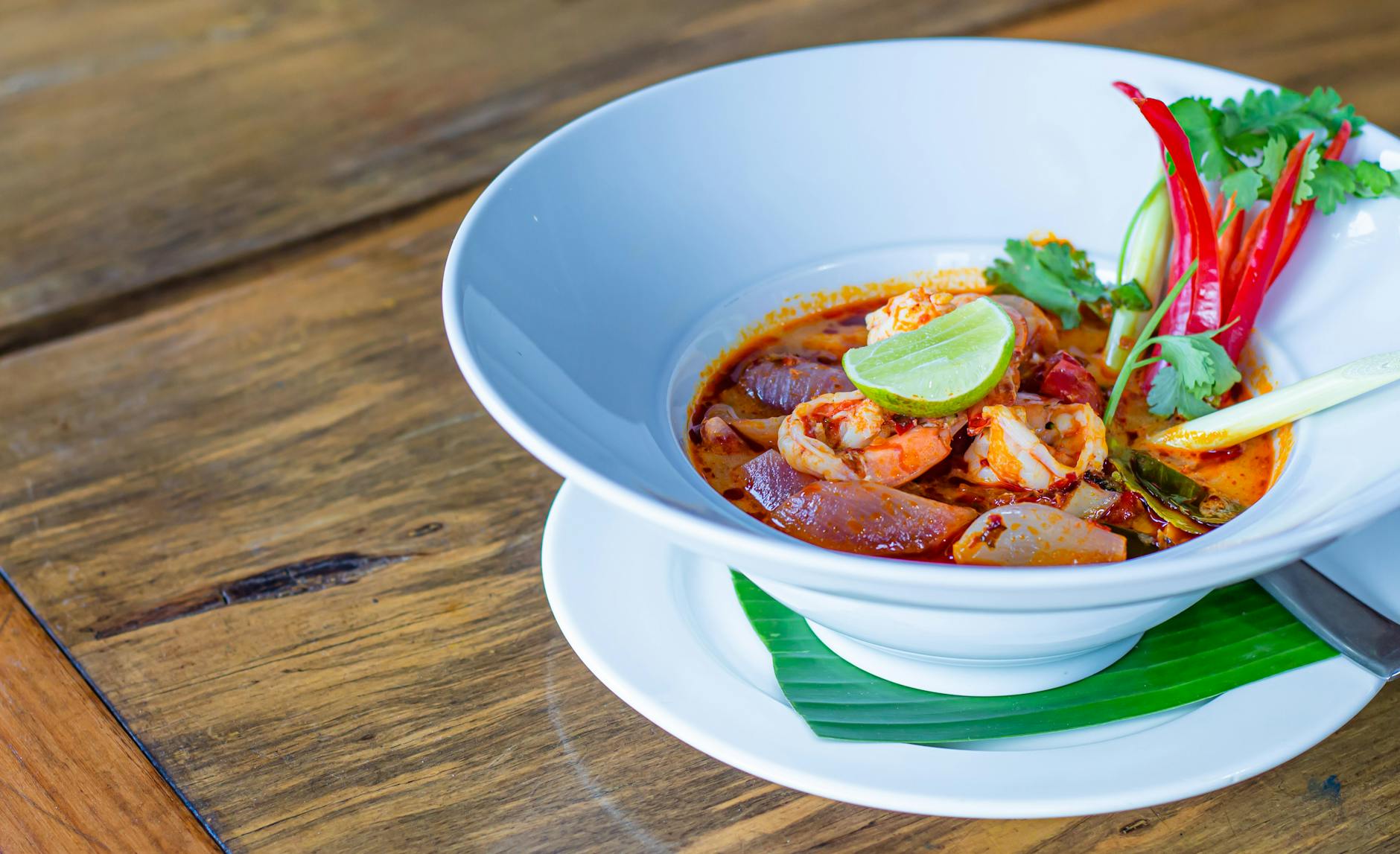
Tom Yum: Origins, Variations, and Where to Eat It
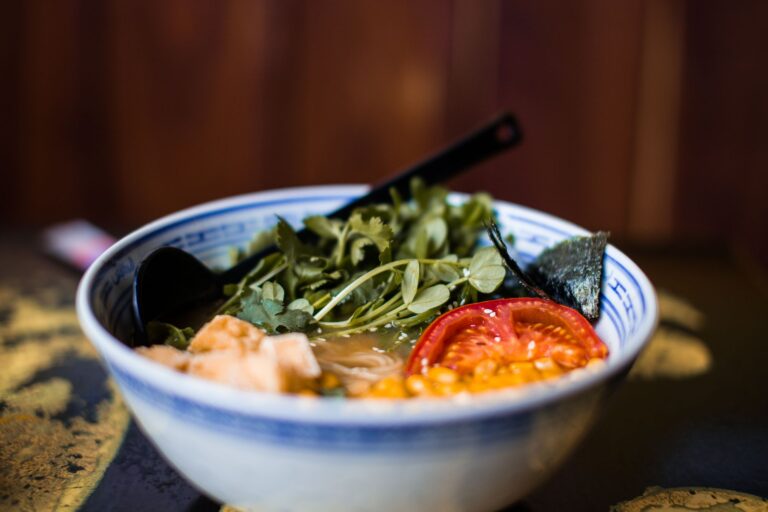
Tom yum is a hot and sour soup that represents Thai cooking in its most refined form: a careful calibration of heat, citrus acidity, and aromatic intensity that should never tip into chaos. The soup’s foundation is a broth infused with lemongrass, galangal, and dried chilies, typically served with shrimp (tom yum goong) or chicken (tom yum gai), though vegetarian and mushroom versions exist. What distinguishes tom yum from other Southeast Asian soups is its aggressive use of acid—usually lime juice—which cuts through the heat and brings forward the aromatics rather than letting them fade into background warmth.
Origins and History
Tom yum emerged as a recognizable dish during Thailand’s absolute monarchy period (late 19th century onward), though its exact origin point remains contested. The most credible accounts trace it to the central plains region, particularly around Bangkok and its neighboring provinces, where the combination of ingredients—lemongrass (serai), galangal (kha), and the Thai chili trade—converged naturally. Some food historians argue tom yum represents a fusion of earlier Thai soup traditions (gaeng) with Chinese hot-and-sour soup concepts, adopted during periods of cultural exchange.
The dish gained royal and diplomatic status in the 20th century. It became a signature representation of Thai cuisine on the international stage partly because its bold, immediate flavors read as “authentically Thai” to foreign palates, and partly because it suited mass production better than more delicate dishes. By the 1960s-70s, tom yum had become Thailand’s default soup export, appearing in Thai restaurants from London to Los Angeles. Interestingly, this global version often bears little resemblance to what’s eaten in Thailand—most international tom yum lacks the soup’s characteristic clarity and relies on coconut milk as a crutch, transforming it into something closer to tom kha gai.
Regional Variations
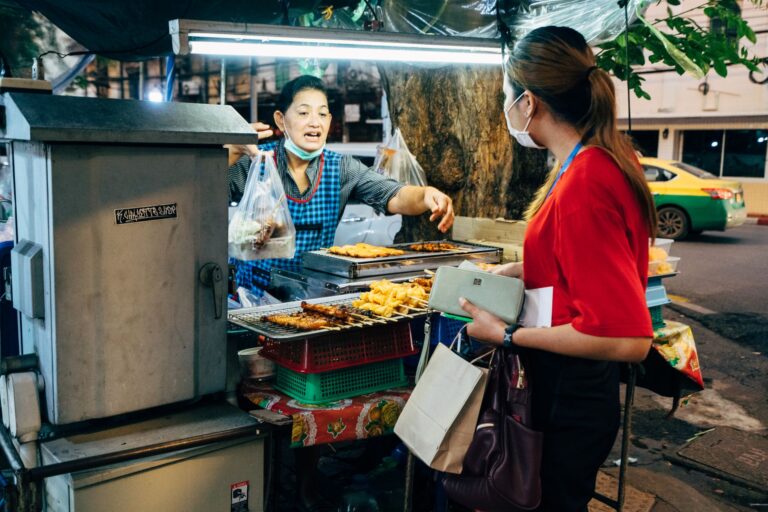
Bangkok’s tom yum tends toward the purist model: a clear broth with minimal fat, built on stock infused with whole lemongrass stalks, galangal slices, and kaffir lime leaves. The soup stays thin and defined, with heat from fresh chilies rather than chili paste. Bangkok vendors often cook to order, adding protein and finishing with fresh herbs seconds before serving, which preserves the aromatics’ volatility.
In Chiang Mai and the northern region, tom yum becomes less common than its creamy cousin tom kha, but when prepared locally, it incorporates northern Thai sensibilities: slightly earthier spice profiles, sometimes with the addition of turmeric or dried shrimp paste, and often served with sticky rice rather than jasmine rice as an accompaniment. Northern versions also tend toward slightly sweeter profiles, balancing heat with palm sugar more generously than Bangkok preparations.
Phuket’s coastal tom yum reflects its geography—shrimp is the default protein, the broth often incorporates dried fish stock or shrimp paste (kapi) for deeper umami, and portions of the soup may include squid or mixed seafood. The tourist-oriented versions in Phuket Town and Patong Beach frequently add coconut milk, creating a hybrid that local cooks debate the validity of, though this creamy iteration has become its own established variant.
What Makes a Great Tom Yum
The essential ingredients are non-negotiable: fresh lemongrass (at least 3-4 stalks, bruised to release oils), galangal (sliced, not powdered), fresh red or bird’s eye chilies, kaffir lime leaves (not regular lime), and quality stock or water. The technique matters more than ingredient count. The broth should be built by simmering lemongrass and galangal for 5-10 minutes before adding protein, creating an infusion rather than a quick boil-and-serve.
Lime juice must be added at the end, after heat is removed or reduced—cooking lime juice diminishes its acidity’s sharpness and creates a dull, flabby flavor. A surprising fact: fish sauce (nam pla) is often omitted in restaurant tom yum, particularly tourist-oriented versions, because its pungency can overwhelm. However, quality tom yum includes a small amount—usually 1-2 teaspoons per pot—to add umami depth without dominating.
The difference between adequate and excellent tom yum comes down to restraint. A great version has distinct flavor layers you can identify: first the heat, then the lemongrass, then the lime, then subtle bitterness from the galangal. A mediocre version tastes like everything simultaneously, typically because too much chili paste was used, or because the broth was over-reduced, collapsing the aromatics into one muddy impression.
Where to Try Tom Yum: City by City Guide
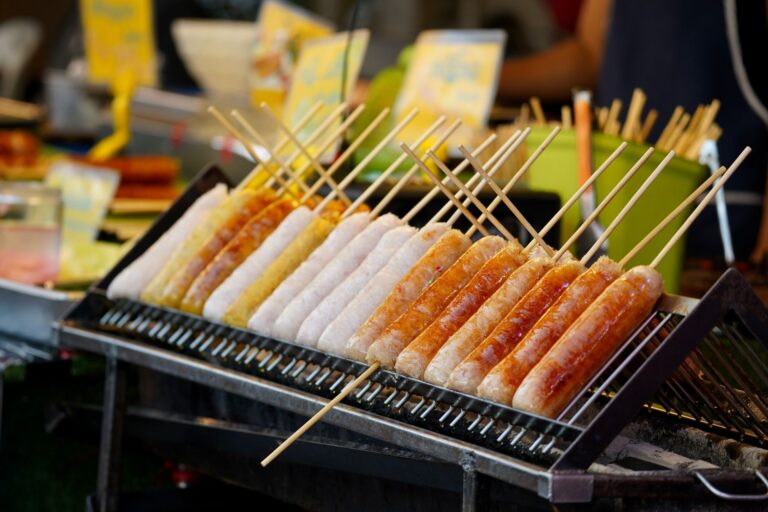
Bangkok: The Chinatown area (Yaowarat) has dozens of tom yum specialists, though street stalls often serve better versions than restaurants. Look for Nai Mong Hoi (near Odeon Circle), which serves a notably clear, traditional version with whole prawns. For casual eating, any morning market around Talad Noi or Pak Khlong Talat will have vendors serving tom yum between 7-11 AM. The Sukhumvit soi 38 night market has competitive tom yum stalls where vendors will adjust heat and sour levels per customer request.
Chiang Mai: Tom yum is less dominant than in Bangkok, but Ton Pao Market (morning market near the old city) has reliable vendors. For a more upscale setting, Huen Phen (serving both traditional khantoke and soups) offers a northern interpretation. Most Chiang Mai tom yum appears as part of a larger meal rather than as a standalone soup.
Phuket: The Phuket Town Weekend Market on Satun Road (Saturday-Sunday mornings) has multiple tom yum stalls competing on freshness and price. For seafood-forward versions, restaurants along Rawai Beach consistently deliver, though expect markup for location. Bimi Market in Phuket Town serves working-class tom yum from 5 AM until early afternoon.
Price Guide
Bangkok: Street stalls and markets: 30-60 THB ($0.85-1.70 USD). Mid-range restaurants: 80-150 THB ($2.30-4.30 USD). Tourist-oriented venues: 200-350 THB ($5.70-10 USD).
Chiang Mai: Market stalls: 25-40 THB ($0.70-1.15 USD). Restaurants: 60-120 THB ($1.70-3.40 USD).
Phuket: Market stalls: 40-80 THB ($1.15-2.30 USD). Beachside restaurants: 150-300 THB ($4.30-8.60 USD).
Tom yum matters to Asian food culture because it proved that boldly flavored, uncompromising dishes could achieve global reach without homogenization—even as international versions diverged from the original, the authentic versions remained unchanged in Thailand, creating a useful tension between what the dish means locally versus what it’s become internationally.