Tokyo
Tokyo Bangkok
 Seoul
Seoul Singapore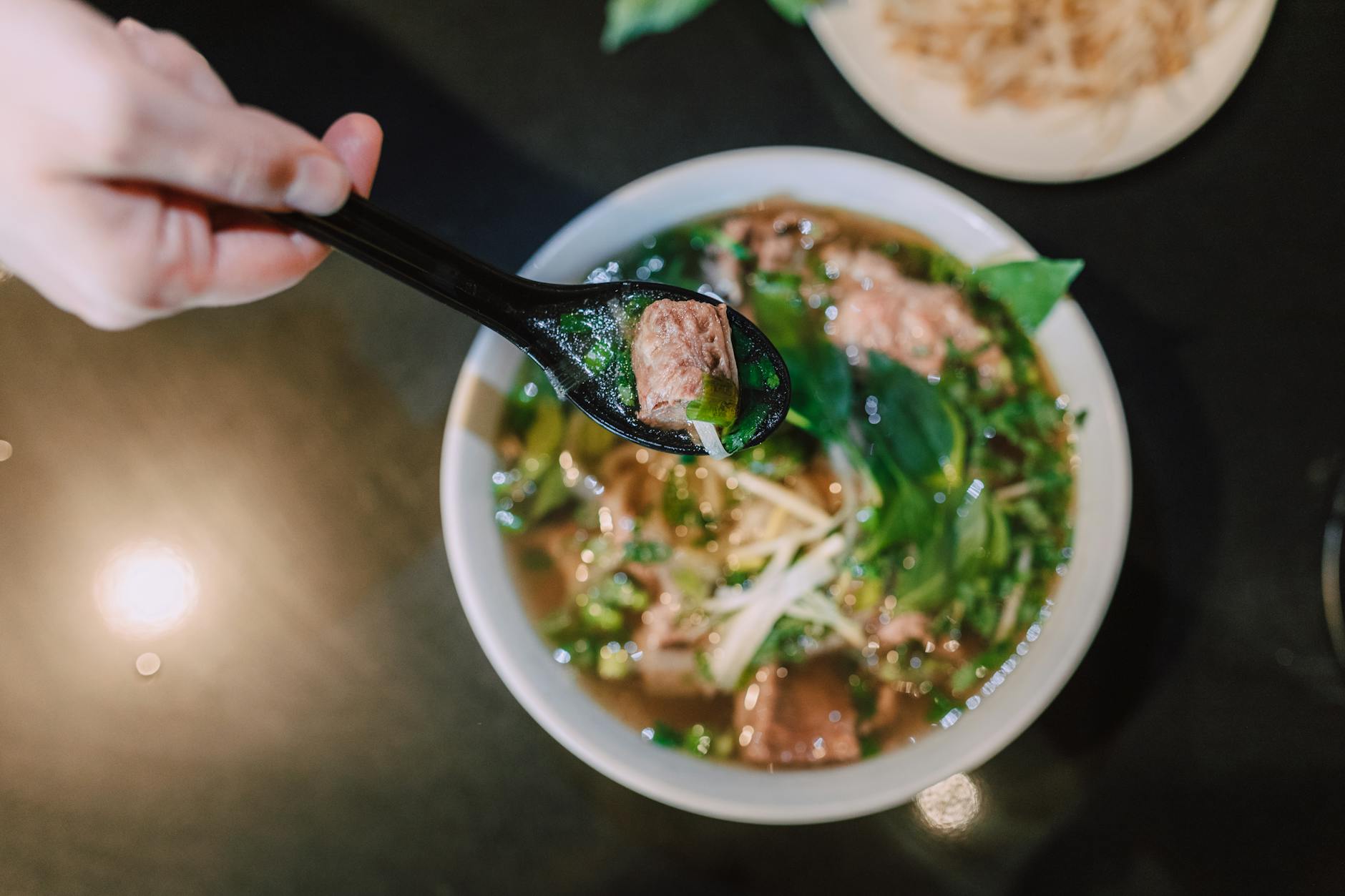
Vietnamese Pho Broth: The 12-Hour Beef Bone Method
Most Pho Broth Fails Because People Skip the Charring Step
Simmer beef bones for 12 hours, and you’ll still get thin, bland broth without charred aromatics. Those blackened onions and ginger aren’t optional—they’re the secret. Flames transform them, creating deep savory flavors no other method can match. Pressure cooker pho tastes flat. Proper broth? Unbeatable.
Great pho broth has three layers: umami from beef bones, complexity from charred aromatics, and spice from star anise, cinnamon, and clove. Knuckle bones, marrow-rich leg bones, and oxtail release collagen for silkiness. But collagen alone won’t keep you coming back for more. That’s where the aromatics and spices come in.
Start with 3 Pounds of Bones Per Quart of Water, Charred Onion, and Patience
Three pounds of bones per quart of water. Vietnamese kitchens use a mix—40% knuckle bones (gelatin), 40% leg bones (flavor), 20% oxtail (depth). Skip generic supermarket bones. Ask your butcher for these.
Blanch first. Boil bones for 2 minutes, drain, rinse. This clears impurities that cloud broth. Then start fresh.
While water heats, char aromatics. Halve an onion (skin on) and a 4-inch ginger piece. Blacken them over flames or in a scorching skillet—3-4 minutes per side. Don’t hold back. Add these to the pot with 8-10 star anise, 1 cinnamon stick, 4-5 cloves, and 1 tablespoon coriander seeds. Toast spices briefly first to wake up their oils.
Simmer 12 hours at the gentlest bubble—no boiling. Boiling makes broth cloudy and greasy. At hour 6, add 2 tablespoons fish sauce. Taste at hour 10. It should be savory-sweet, with whispers of anise and cinnamon.
The Real Reason Vietnamese Restaurants Close Their Broths at Night
Most Hanoi and Ho Chi Minh City pho spots don’t make new broth daily. They keep one going, adding bones and water over time. Some broths age five years. It’s not laziness—it’s how flavors deepen and balance.
This also means pho restaurants can’t scale. Chains fail because you can’t replicate a decades-old broth elsewhere. If a shop’s been in one spot for 15 years? That broth’s worth a trip.
At home, mimic this by freezing broth and using it to start the next batch. Do this 3-4 times, and the broth gets richer. It’s the closest you’ll get to restaurant magic without a perpetual pot.
Make your first batch this weekend. Freeze some in ice cube trays. Use those cubes for batch two in a few weeks. By batch three, you’ll see—pho broth isn’t made. It’s built.