Boat Noodles: Thailand’s Most Misunderstood Street Dish
|

Boat Noodles: Thailand’s Most Misunderstood Street Dish

The smell hits you first—a sharp, funky sweetness cutting through the diesel fumes along Bangkok’s Khlong Ong Ang canal. You’re standing at a wooden stall no bigger than a closet, watching a vendor ladle dark broth over rice noodles with the efficiency of someone who’s done this ten thousand times. The bowl arrives in your hands still steaming, a small mountain of meat, offal, and herbs crowded into a container barely larger than a coffee mug. This is boat noodles, and if you’ve been sleeping on it, you’re missing one of Thailand’s most honest expressions of what food should actually taste like.

Born in Bangkok’s Floating Markets, Now Everywhere

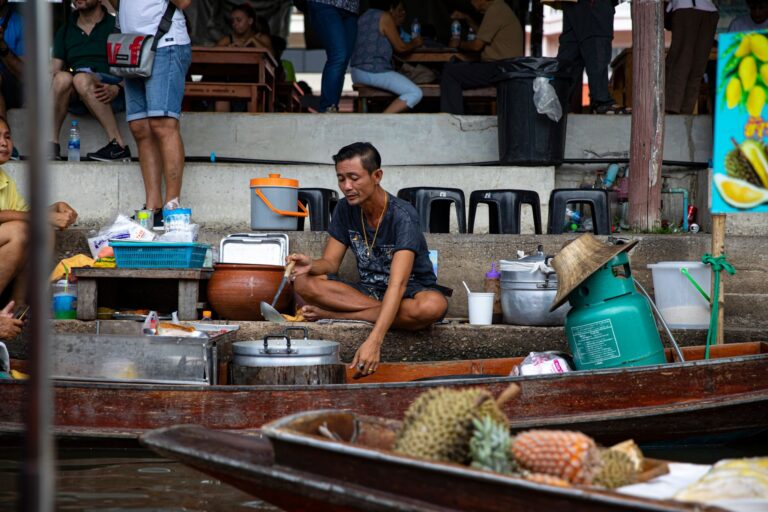
Boat noodles emerged from necessity, not nostalgia. In the 1950s and 60s, vendors in Bangkok’s floating markets needed portable meals they could sell quickly to boat workers navigating the canals. The solution was obvious: small portions, intense flavoring, everything you needed in a single slurp. The dish took its name literally—it was sold from boats, eaten standing up or sitting on wooden benches, gone in five minutes flat.

Today you’ll find boat noodle stalls in Bangkok’s old quarter, particularly around Thonburi and the areas near Wat Arun, but also in Chiang Mai, Phuket, and increasingly in Bangkok’s modern neighborhoods where young people have rediscovered it as the anti-Instagram meal. The stalls look identical: a metal cart, a massive pot of broth simmering since dawn, plastic stools, and a laminated menu in Thai. The best ones have been operating since before you were born.

Dark Broth, Organ Meat, and the Art of Controlled Chaos

What makes boat noodles distinctive isn’t any single ingredient—it’s how they work together in miniature. The broth is dark, almost black, made from pork or beef bones simmered with star anise, cinnamon, and cloves, but the real depth comes from fermented soy sauce, oyster sauce, and sometimes a splash of blood. Yes, blood. It sounds extreme until you taste how it rounds out the flavors, adding umami depth that regular stock simply can’t match.

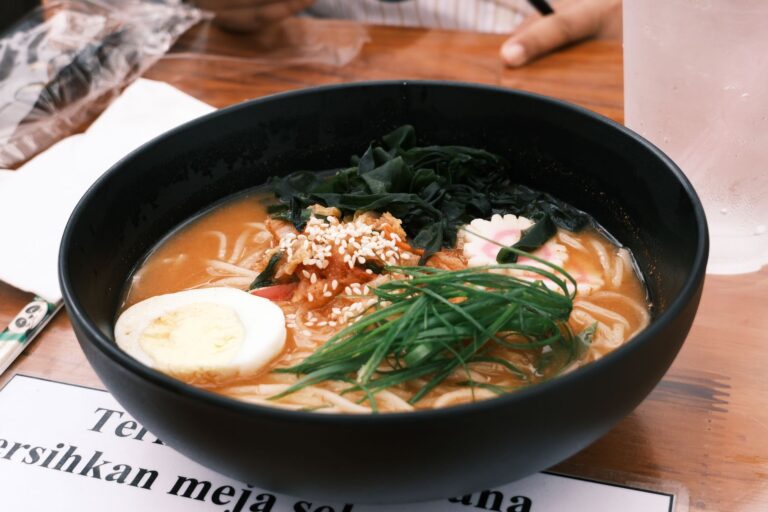
The toppings are where boat noodles separate the serious eaters from the casual ones. You get pork offal—liver, kidney, intestines—cooked until tender but still with texture. There’s usually ground pork, sometimes a meatball, always fresh herbs like cilantro and Thai basil that you add yourself. The noodles are thin rice noodles, almost delicate, chosen specifically because they absorb the dark broth without falling apart. You’re eating something that tastes expensive and complicated in a bowl that costs the equivalent of two dollars.

Why This Matters: Thai Food Without the Performance

Boat noodles represent something crucial about Thai cooking that gets lost in translation abroad. There’s no pretense here. Thai food isn’t about making things look beautiful or deconstructing tradition—it’s about making something so delicious and efficient that people keep coming back. Boat noodles use every part of the animal because waste is disrespectful. They layer flavors—sweet, salty, sour, spicy—not for balance but for complexity. They’re small because portion control is built into the culture, not because restaurants are trying to charge premium prices.

When you eat boat noodles, you’re eating the same thing a Bangkok construction worker eats, the same thing a taxi driver eats, the same thing a retired teacher eats. There’s no separate tourist version. The vendor doesn’t modify the recipe based on who’s ordering. That consistency, that refusal to compromise, is exactly what makes Thai street food so compelling.

If you’re in Thailand, find a boat noodle stall in an old neighborhood—not a mall, not a tourist zone. Order a small bowl. Don’t overthink it. Add the herbs yourself. Finish it in five minutes. You’ll understand why this dish has survived for seventy years without needing to be trendy.

🍴 Get the best of Asian food, weekly
Trending dishes, hidden gems & verified picks — straight to your inbox. No spam, unsubscribe anytime.
Priya Nair
About the Author
Priya Nair

Priya Nair is WokFeed's South and Southeast Asian food specialist. Born in Mumbai and now based in London, she writes about Indian street food, Thai cuisine, and Vietnamese cooking. Priya believes the best food stories are found on plastic stools, not in Michelin-starred restaurants.

📊 Data Sources & Editorial Standards
📍 Google Maps

WokFeed's restaurant guides are compiled from real traveler data, on-the-ground research, and cross-verified across multiple platforms. Our editorial team fact-checks all recommendations before publication.

Similar Posts