Tokyo
Tokyo Bangkok
 Seoul
Seoul Singapore
Street Food Safety: How to Eat Asian Street Food Safely
Back in 1960s Bangkok, cholera almost wiped out the street food scene—until vendors noticed something odd. The busiest stalls, with customers constantly coming and going, had the fewest infections. Turns out, popularity isn’t just about flavor—it’s a safety signal. Now, millions of travelers eat street food safely every year by following this simple rule.
Street food keeps cities fed. In Vietnam, Thailand, and the Philippines, about 40% of city dwellers grab meals from vendors daily. These aren’t just tourist spots—they’re lifelines. Some travelers panic over street food while others take foolish risks. The sweet spot? Knowing what actually matters.
Watch for the Turnover Tell: Why Popular Stalls Win
The Bangkok lesson still holds. Crowded stalls mean ingredients move fast—nothing sits around for hours. Spot a noodle vendor in Penang with a lunchtime queue? That’s your green light. They’re cooking fresh all day, cutting corners isn’t an option.
Focus on how long food waits after cooking. Good pho in Hanoi hits your bowl minutes after assembly. Jakarta satay shouldn’t linger under lamps. Watch the rhythm—are they cooking per order or reheating old batches? Singapore’s top char kway teow stalls fire out individual portions nonstop.
Heat is your friend. Soups should steam. Grilled meats need visible char. Lukewarm equals risky. Walk away if it looks tired—vendors get it, they know you’ve got options.
The Water Question: Beyond Boiling and Ice
Travelers stress about water, but the real issue is simpler. Most Southeast Asian street vendors use city water—often safer than foreigners assume. The actual danger? Dirty hands or shared tools contaminating food.
Skip ice if you’re unsure about local water systems, but major cities like Bangkok and KL use treated water. Their ice is usually fine. Smaller towns? More risk.
Watch hands, not gloves. Do vendors wash after handling cash? In Taiwan, you’ll see proper hand-washing setups. In India, check if raw and cooked foods stay separate. Gloves can be deceiving—they’re useless if never changed.
Reading the Stall: What Clean Actually Looks Like
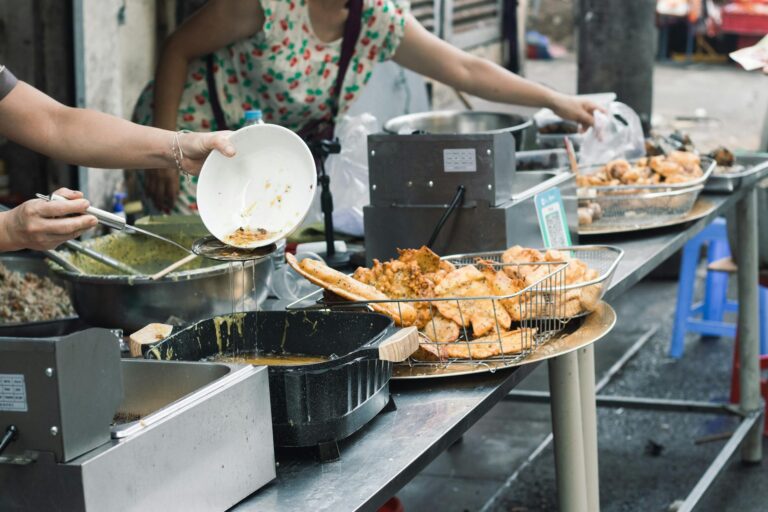
Don’t expect spotless. A working Bangkok stall will have splatters and steam—that’s life. Look for systems: ingredients stored right, tools kept clean, trash contained.
Cross-contamination is key. A good bánh mì stand uses different knives for pâté and veggies. A scorching wok? That heat kills germs naturally.
Trust the vendor’s habits. Are they snacking on their own food? Thai and Filipino vendors often do—they’re not risking their health. If a stall looks deserted or the cook seems sick, trust that instinct.
Street food safety isn’t rocket science. Eat where locals do, watch how food’s handled, and remember—this system feeds millions safely every day. Stay sharp about turnover, temperature, and hygiene, and you’ll discover some of your trip’s best bites.