Tokyo
Tokyo Bangkok
 Seoul
Seoul Singapore
Bangkok Street Food by Neighborhood: Where to Actually Eat
Bangkok’s street food isn’t some staged attraction—it’s how millions actually eat every day, with meals cheaper than your morning latte. If you’re eating overpriced pad thai near your hotel, you’re missing the point entirely.
Yaowarat: Where Cheap Meat on Sticks Actually Matters
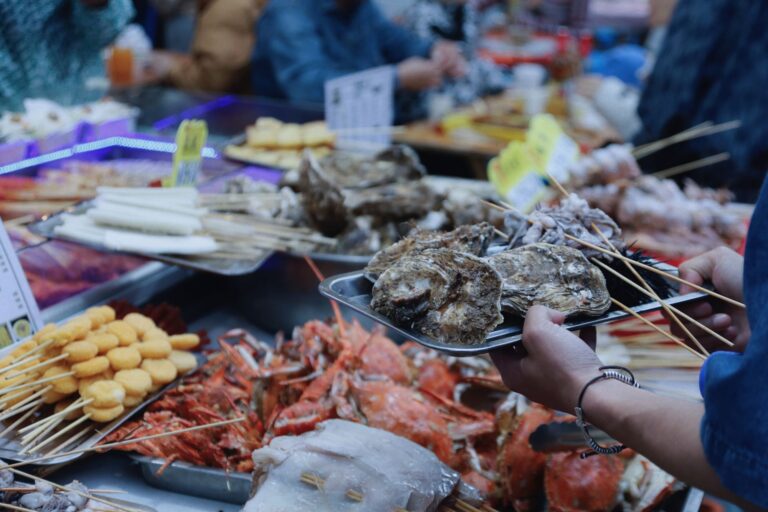
Yaowarat is Bangkok’s Chinatown after dark, where grilled meat reaches its peak. A perfect pork neck skewer isn’t just thrown on the grill—it’s sliced thin, seasoned hard with salt and pepper, and blasted with serious heat. Bad ones taste like rubber. The good ones? Worth the flight.
Find Nai Mong Hoi Tod on Yaowarat Road around dinner time. Get the grilled pork jowl—charred, fatty, perfect with beer. Their oyster omelettes? Crispy edges, runny centers, packed with actual oysters. Best in town. Meals run 150-250 baht ($4-7). Look for the busy cart with the massive grill and no English sign.
Silom: Satay and Khao Man Gai Done Right
Silom’s day market feeds office workers fast. This isn’t tourist territory—it’s where food survives by being good, cheap, and quick.
Khao Man Gai Pratunam might be Bangkok’s most overlooked dish. Perfect versions need tender poached chicken, rich rice cooked in broth, and sauce with the right garlic-ginger punch. Pratunam Chicken Rice has nailed it since 1932. Costs 40 baht ($1.10). Eat it standing. For satay, hit the cart near Talat Noi’s entrance—her peanut sauce actually tastes like peanuts, not glue.
Ari and Soi 26: Where Bangkok Actually Lives (And Why That Matters)
Chinatown gets the hype, but Ari and Soi 26 show how Bangkok really eats. No frills, no influencers—just good food for people who know better.
Boat noodles started in Ari, and local stalls still do them right: thin noodles in dark, meaty broth with pork blood and offal, topped with crispy belly and egg. The broth tastes like hours of work because it is. Soi Polo has the best spots—go before 11 AM or miss out. On Soi 26, any cart selling sai oua (northern sausage) is worth stopping. Charcoal-grilled, crumbly, served with sticky rice. Zero English signs means you’re doing it right.
The Honest Truth: You Will Get Stomach Issues (Maybe)
Yes, Bangkok belly happens. But locals eat this daily without problems—the food turns over fast, and cooks know their stuff. Your stomach might rebel simply because it’s not used to it. Skip raw veggies if you’re nervous, but don’t avoid street food altogether. The risk exists, but so does the reward.
Hit Yaowarat at night. Find Nai Mong. Order pork jowl and an omelette. Spend $6. Stand while eating. That’s real Bangkok.