Tokyo
Tokyo Bangkok
 Seoul
Seoul Singapore
Hong Kong Street Food by Neighborhood: Local Eating Guide
Hong Kong’s street food didn’t just happen by accident—it was a calculated move by British colonial rulers. Back in the 1950s, officials legalized street vending to tackle unemployment and keep the peace. What began as social engineering birthed one of the planet’s most intricate casual food scenes. These days, knowing Hong Kong means knowing where the locals queue up, not where the guidebooks send tourists.
Mong Kok: Where Old-School Stalls Meet Urban Chaos
Mong Kok runs on dai pai dong—those no-frills food clusters under tin roofs. At Argyle Street’s stalls, Cantonese kitchen skills get applied to everyday eats. Try the pork knuckle stewed with black beans: hours of braising turns tough cuts into something velvety. The soy sauce here isn’t your average table condiment—it’s cooked down with rock sugar and star anise until it coats your spoon.
Fa Yuen Street is roast meat central. Vendors cure their ducks for a full day before roasting them in specialized ovens. Notice how the skin shatters differently than Peking duck? That’s Cantonese roasting—texture over juiciness. A plate with rice and pickled greens costs less than $4. Those pickles aren’t garnish; they ferment for weeks to balance the meat’s richness.
Central: Fast Food, Slow Techniques
Central’s street food plays by different rules—it’s built for office workers in a hurry. Around Gage Street, wonton noodle soup shows off Cantonese precision. The filling? Hand-chopped shrimp to preserve texture. The broth? Simmered gently to stay clear. No shortcuts.
Don’t sleep on the egg waffles. These aren’t sweet treats—they’re savory pockets. The batter’s starch mix creates that perfect crisp outside with a soft middle. Fillings range from shrimp to sweetcorn. Vendors watch the heat like hawks; one degree too hot ruins the texture.
Sham Shui Po: Where Chefs Test Ideas
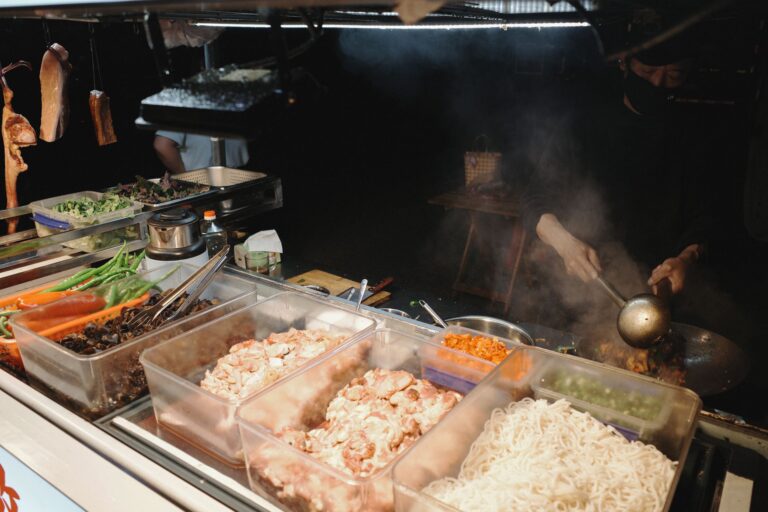
Sham Shui Po is Hong Kong’s culinary lab. Young chefs experiment here before opening restaurants. Apliu Street’s chow kway teow proves simplicity works when ingredients shine. The trick? Keep the noodles moving in a screaming-hot wok with radish, sausage, and sprouts.
Congee stalls never close. Their rice porridge cooks for six hours minimum, turning grains into creamy velvet. Toppings vary—century egg, seafood, or pork with bone broth poured tableside.
Hong Kong street food flips the script on casual dining. The techniques rival fancy restaurants—timing, sourcing, skill. Hit Mong Kok for variety, Central for technique, Sham Shui Po for surprises. Follow the locals, not the cameras.