Tokyo
Tokyo Bangkok
 Seoul
Seoul Singapore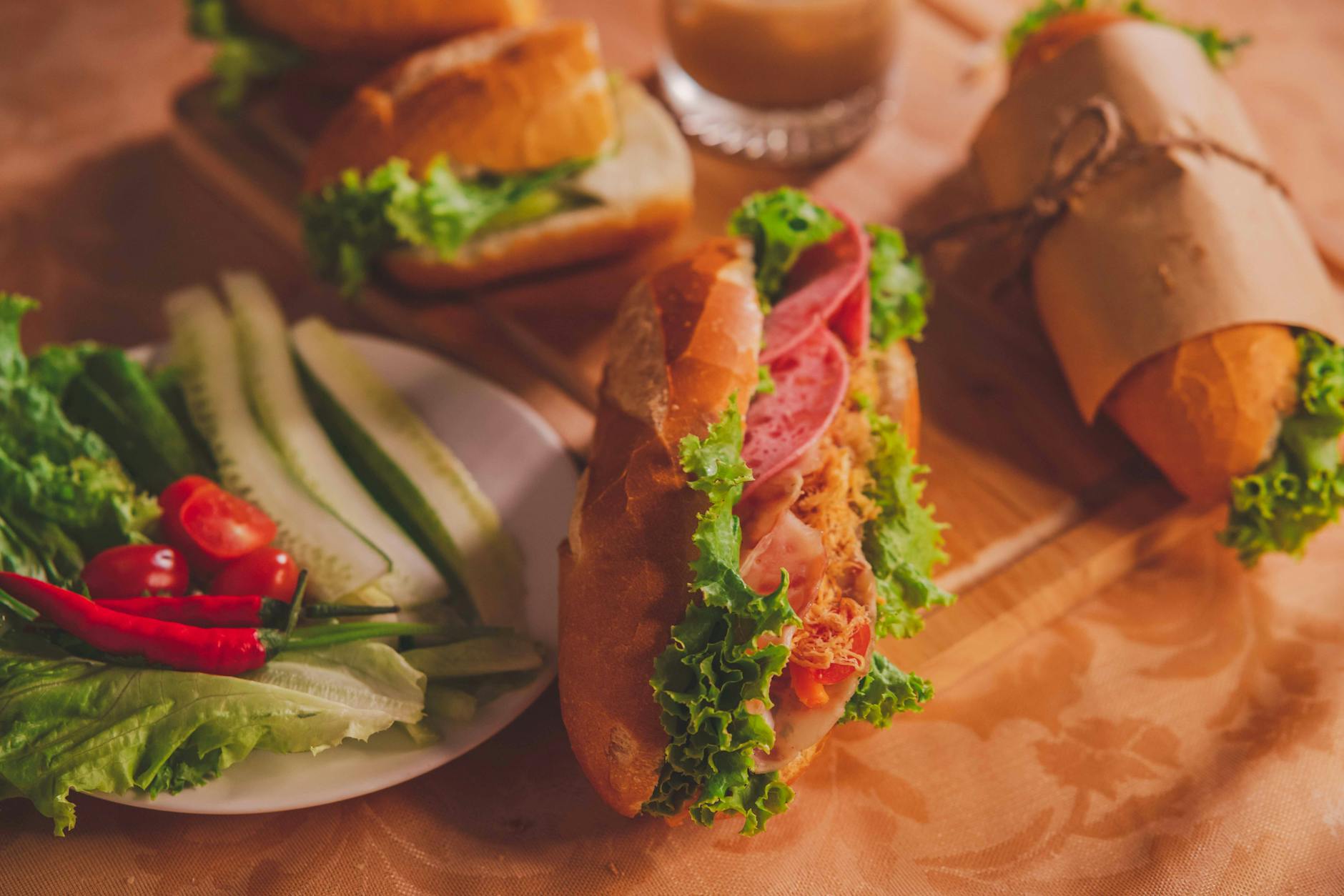
Banh Mi: Vietnam’s Perfect Sandwich and a Culinary Accident of History

Banh mi is the Vietnamese sandwich that’s all about balance. It starts with a crispy, airy baguette, split open and stuffed with pickled vegetables—carrots and daikon radish—plus fresh cilantro, sliced chili peppers, and your choice of protein. Traditional fillings include pâté, Vietnamese cold cuts (cha lua), or headcheese, though grilled chicken, sardines, or tofu are common now. What makes banh mi special isn’t just one ingredient but how they all play off each other: the crunch of the bread against the soft filling, the tangy pickles cutting through rich pâté, the heat of chili balanced by cool herbs. It’s a global sandwich icon born from chance and history.
Origins and History
Banh mi came to life during French colonial rule in Indochina, roughly from 1887 to 1954. It’s the result of French baguettes meeting Vietnamese flavors. The French brought wheat bread-making to the region, setting up bakeries in Hanoi, Ho Chi Minh City (then Saigon), and other colonial hubs. At first, banh mi was a luxury—food for the French elite and wealthy Vietnamese, not street fare.
Things changed in the 1950s, and the shift accelerated after the Vietnam War ended in 1975. With fewer French residents around, banh mi vendors adapted to serve Vietnamese workers. They added locally inspired ingredients like pickled daikon and carrots—a nod to traditional Vietnamese preservation methods—alongside fresh cilantro and homemade pâté instead of French imports. Vietnamese cold cuts, made with pork, fish sauce, and spices, became a staple. The sandwich became cheap, portable, and tailored to Vietnamese tastes. By the 1980s and ’90s, banh mi was everywhere—sold from handcarts and storefronts, ready in 30 seconds, and costing less than a dollar.
Regional Variations
Ho Chi Minh City is where most tourists encounter banh mi. Here, the baguette is thinner and crispier, with a pronounced crust. Pâté (pâté gan) is a must, often layered generously with cha lua (Vietnamese cold cuts) and head cheese (cha hoac) for added protein depth. Mayonnaise is almost always included—a touch some purists call Americanized. Many vendors also smear butter inside the baguette before toasting it.
Hanoi does banh mi differently. Grilled pork (thit nuong) or chicken (ga nuong) are more common than pâté, reflecting the north’s love for fresh-grilled meats. The baguette is softer, with a less aggressive crust. Pickles are used sparingly, and pâté, when present, is applied lightly. The overall vibe is less rich, more herbaceous.
Hoi An has its own twist: banh mi made with bánh mì cà chua, a sweeter, softer tomato bread. Fresh herbs unique to the region often make an appearance, and Vietnamese pâté gets a local spin. Some vendors add fish cakes (cha ca) as the protein. Hoi An’s banh mi feels less standardized, shaped by individual vendor styles.
What Makes a Great Banh Mi
The baguette is key. A proper banh mi baguette needs a thin, crispy crust that shatters when you bite into it. Inside, it should be light and airy, with visible holes—anything too dense ruins the sandwich. Many mass-produced versions fall short.
Pickled daikon and carrots (do chua) bring essential tang and sweetness. They’re cut into thin matchsticks and preserved in a mix of rice vinegar, sugar, and salt. Done right, they stay crunchy and balanced. Done wrong, they turn mushy or overly sour.
Pâté, if used, should be creamy but not grainy, with a distinct pork flavor and Vietnamese spices (often including fish sauce). Cheap pâté tastes flat; good pâté has layers of flavor.
Fresh cilantro and thinly sliced Thai or bird’s eye chili are non-negotiable. They add aroma and heat—quality vendors let you decide how much chili to add. Cucumber slices often make an appearance for extra crunch and a cooling effect, especially in hot weather.
Here’s a pro tip: banh mi often gets better with a thin layer of liver pâté plus head cheese (cha hoac). Together, they create a depth of flavor that pâté alone can’t achieve. Vietnamese headcheese isn’t rubbery like some Western versions—it’s delicate, with nuanced pork flavor.
Where to Try Banh Mi: City by City
Ho Chi Minh City: The Ben Thanh Market area (District 1) is packed with banh mi stalls, though they cater heavily to tourists. For reliable quality, check out the permanent stalls on Nguyen Hue Walking Street. Banh Mi Hoa Ma and Banh Mi Phuong are chains that deliver consistent results across the city. For something less polished but more authentic, hit the alleyway stalls in District 3 around Vo Van Tan Street—many specialize in specific proteins.
Hanoi: The Old Quarter (Hoan Kiem District) is banh mi central, with vendors clustered around Hang Ga Street. Ta Hien Street’s stalls are fine but overpriced; better options are a block over on Hang Dao Street, where locals grab breakfast. For the best grilled-meat banh mi, head to vendor carts near Ho Tay (West Lake) around 6 AM—they’re set up for office workers on their morning commute.
Hoi An: Hoi An’s banh mi scene is more spread out, with vendors operating from individual storefronts rather than market clusters. Tran Hung Dao and Le Loi streets are good starting points. Banh mi here is less standardized than in Hanoi or Ho Chi Minh City, so local recommendations from hotel staff can point you in the right direction.
Price Guide
Banh mi is meant to be affordable. In Ho Chi Minh City, a basic version costs 15,000-30,000 VND ($0.60-$1.20 USD), with premium options or better proteins running 40,000-60,000 VND ($1.60-$2.40 USD). Hanoi prices are similar. Tourist-heavy areas charge 50,000-80,000 VND ($2-$3.20 USD), which is more about markup than quality.
Outside Vietnam, prices jump. In Thailand’s major cities, banh mi costs 60-100 THB ($1.70-$2.85 USD). In the US—especially in Vietnamese communities in California and Texas—you’ll pay $4-$7 USD for authentic versions. In big-city restaurants, expect $8-$12 USD.
Banh mi is a testament to how food evolves. It’s not just a French sandwich copied by Vietnamese cooks—it’s a Vietnamese creation that took a colonial import and made it distinctly its own. Today, it’s a global symbol of Vietnamese identity.