Tokyo
Tokyo Bangkok
 Seoul
Seoul Singapore
Samgyeopsal: Origins, Variations, and Where to Eat It
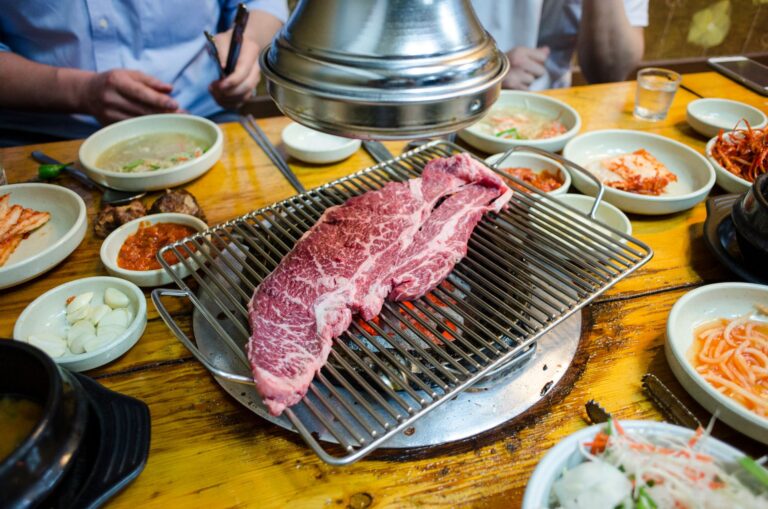
Samgyeopsal is thick-cut pork belly grilled right at your table. It comes with ssamjang (spicy fermented dipping sauce), doenjang (soybean paste), and an assortment of banchan (side dishes). The name means “three-layer meat”—you can actually see the distinct layers of fat, meat, and skin. Unlike the thin slices used in Japanese yakiniku, samgyeopsal stands out for its thickness (usually 5-8mm). That heft lets it develop a crispy crust while staying tender inside. It’s meant for sharing, turning dinner into a social event as much as a meal.
Origins and History
Samgyeopsal’s history is shorter than you’d think. While Koreans have grilled pork for ages, the specific style of thick-cut belly cooked tableside only took off in the 1990s. Seoul’s Gangnam district restaurants pioneered it—they wanted an affordable protein that worked with their new tabletop grills. Pork belly fit perfectly: cheap to buy but fancy enough to justify higher menu prices when paired with good sauces.
The real breakthrough was making diners do the cooking. Restaurants saved on labor while giving customers something fun to do. This hands-on approach matched Korea’s growing food-as-entertainment scene. By the 2000s, samgyeopsal had spread nationwide. Now it’s Korea’s most successful food export, with chains like SamgyetPlus and Genesis BBQ operating globally.
Regional Variations
In Seoul—especially around Gangnam Station and Hongdae—expect fancy sauces and premium pork. Restaurants here often use Berkshire or heritage breeds, charging 20-30% more than elsewhere. Their sauce game is strong: multiple gochujang types, house-made doenjang with anchovy stock, and creative perilla leaf twists.
Jeju does things differently. Their black pork comes from wild boar crosses, giving it darker color and mineral notes. It’s fattier too, so locals keep seasonings simple—just salt and sesame oil. This no-frills approach separates tourist traps from legit spots.
Busan’s version shows Japanese influence. Portions run smaller, cuts are individual-sized rather than shareable, and they use more gochugaru (red chili flakes). Locals often drink makgeolli (rice wine) with it instead of soju, changing the flavor dynamic.
What Makes a Great Samgyeopsal
It starts with the pork. Korean heritage breeds and Jeju black pork have better fat marbling than factory-farmed meat. That fat renders slowly when grilled, creating the perfect texture contrast. Look for visible fat lines in pinkish meat—uniform red means it’s too lean.
Thickness is crucial. Under 5mm and it overcooks before browning properly. Over 8mm and the fat won’t render fully, leaving it chewy. Pros use special slicers to hit the sweet spot.
The grill matters too. Cast iron heats unevenly—that’s good. It creates varied char patterns. Get it blazing hot (180-200°C/356-392°F) before adding meat.
Sauces make or break it. Real ssamjang mixes gochugaru, doenjang, garlic, sesame oil, and honey—skip the supermarket stuff. Aged doenjang (minimum two years) beats mass-produced versions.
Here’s a pro tip: only flip once. Constant flipping cools the grill and ruins the crust. Good places cook it 2-3 minutes per side, flip once, and serve.
Where to Try Samgyeopsal: City by City
Seoul: Gangnam Station area (especially Nonhyeon-dong and Sinsa-dong) has the top spots. Maple Tree House (Gangnam Branch) set the modern standard. For less touristy options, try Hongdae’s neighborhood joints where locals outnumber visitors. Prices run ₩25,000-45,000 but the quality shows.
Jeju: Gujwa-eup is black pork central. Many restaurants sit right by farms, so the meat’s crazy fresh (some slaughter pigs same-day). Costs ₩20,000-32,000 but worth it. Avoid touristy Jeju City spots—follow Korean vacationers instead.
Busan: Nam-gu district near Nampo-dong market keeps it traditional. These places care more about taste than Instagram. Prices average ₩18,000-28,000, offering better value than Seoul. Gwangbok-ro Street has good clusters for bar-hopping.
Price Guide
Seoul: ₩20,000-50,000 per person. Fancy heritage pork spots: ₩35,000-50,000. Regular places: ₩20,000-28,000.
Jeju: ₩18,000-35,000 per person. Black pork specialists: ₩25,000-35,000. Standard versions: ₩18,000-24,000.
Busan: ₩16,000-30,000 per person. Most fall in the ₩20,000-24,000 range.
Banchan (side dishes) come free. Alcohol costs extra. Lunch often runs 10-15% cheaper than dinner.
Samgyeopsal changed Asian dining by solving a key problem: how to make interactive meals profitable without sacrificing quality. Its table-grill format now influences Korean-fusion restaurants worldwide, reshaping how we eat out.