Tokyo
Tokyo Bangkok
 Seoul
Seoul Singapore
Gamjatang: Korean Pork Spine Stew, Explained
Gamjatang isn’t for the faint of heart—and that’s why it’s special. A steaming bowl of pork spine, potatoes, and perilla leaves turns cheap cuts into something rich. Korea’s working-class comfort food at its best.
Pork Spine Isn’t Waste—It’s the Point
“Potato soup” doesn’t do it justice. The real star is gomtae—pork spine with meat still clinging to bone—simmered for hours with gochugaru (red chili flakes), garlic, and doenjang (soybean paste). Potatoes play backup. The bones run the show.
Three things make or break it: bone quality, broth depth, and seasoning balance. Done right, the meat surrenders to a spoon. Broth coats your tongue without scalding. Bad versions? Salty, rushed, chaotic.
This isn’t some ancient tradition. Gamjatang emerged in 1970s Seoul when butchers had spare spines and workers needed cheap meals. Pure practicality turned delicious.
Jongno-gu Has the Originals; Hongdae Has the Experiments
For the real deal, hit Jongno-gu’s backstreets near Gwangjang Market. Gogung (종로구 종로5길 7) has served the same recipe since 1992—their broth tastes like decades of accumulated flavor. Stick to the classic (12,000 won/$9). Share a table. No substitutions.
Hongdae’s younger spots play with the formula. Haemul Gamjatang (홍대입구역 근처) tosses in seafood—shrimp, mussels, squid (15,000-18,000 won). Some add gochujang or perilla flowers. Interesting? Sure. But Jongno’s original still wins.
Regional twists exist—Busan adds more seafood, Daegu turns up the heat—but Seoul’s versions set the standard.
The Thing Restaurant Reviews Won’t Tell You: It’s a Drinking Meal
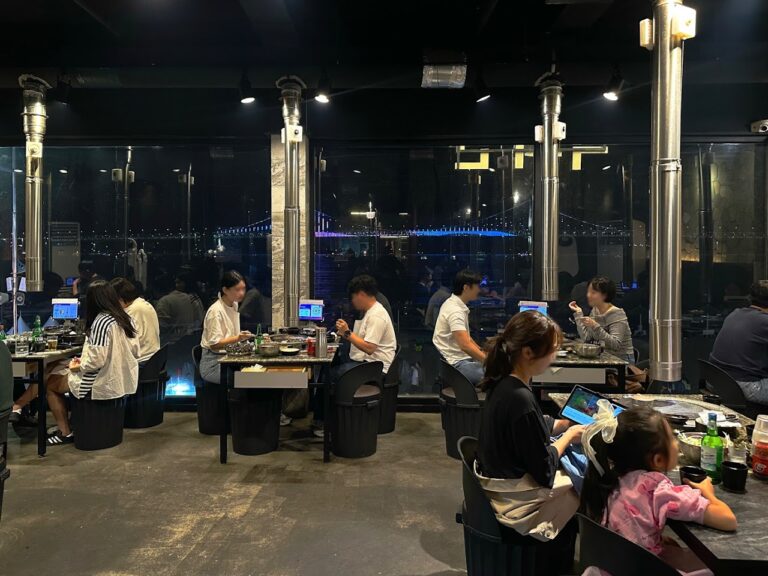
Nobody eats gamjatang at noon. It’s 10 p.m. food after soju and bar snacks. The heat clears your head. The fat soothes a boozy stomach. Picking meat off bones gives drunk hands something to do.
That’s why places empty at lunch pack by nightfall. Show up early and you’ll get confused looks. Come late. Come hungry. Come with friends who don’t mind slurping.
Pro tip: The broth left after meat and potatoes? Sacred. Ask for rice, mix it in (“soups-bap”). Every local does this. So should you.
Do this: Find a Jongno-gu spot. Go late. Split one pot between two. Scrape the bones clean. Finish with rice in broth. No photos. Just eat.