Tokyo
Tokyo Bangkok
 Seoul
Seoul Singapore
How to Make Tonkotsu Ramen at Home Like Japan
Tonkotsu ramen isn’t a quick fix—it demands 18 to 24 hours of simmering pork bones to nail that creamy, milky broth. Skip this step, and your ramen won’t come close to the real deal from Fukuoka. A proper tonkotsu versus a rushed version? Night and day. One tastes like a ramen shop. The other tastes like a compromise.
The Broth Is Everything: Why Long Cooking Transforms Pork Bones Into Liquid Gold
That pale, creamy broth? It’s all about emulsification. Bone marrow, collagen, and fat break down over hours of steady heat, creating a rich suspension that clings to your tongue. Four hours won’t cut it. Eight isn’t enough. In Hakata, ramen shops start simmering at 4 p.m. and don’t stop until lunch the next day.
Grab 2 to 3 pounds of pork bones—femur, knuckle, and neck work best. Have your butcher chop them into 3-inch pieces. Blanch them in boiling water for 2 minutes, then rinse. This step clears out gunk that would muddy your broth. Toss the bones in a stockpot with 4 quarts of water, a smashed 2-inch ginger chunk, and a halved onion. Boil, then dial it back to a lazy simmer—just a few bubbles. Skim foam early, then walk away. At 18 hours, strain through cheesecloth. Done right, the broth should coat a spoon like liquid silk.
Season with tare, a flavor-packed base. The Hakata classic mixes soy sauce, sake, mirin, and chicken stock. Simmer 1 cup soy sauce, ½ cup sake, ¼ cup mirin, and 1 cup chicken stock for 10 minutes. When assembling bowls, mix 1 part tare to 4 parts broth.
Where Sourcing Matters: Alkaline Noodles and the Specifics That Change Everything
Fresh ramen noodles with kansui (alkaline water) are mandatory. Dried noodles or regular pasta? Forget it. Kansui gives ramen its springy bite and slight yellow tint. Find them at Japanese markets or online spots like Sun Noodle. Want to go all in? Make your own with bread flour, salt, water, and kansui powder—but for most, buying fresh is the smarter play.
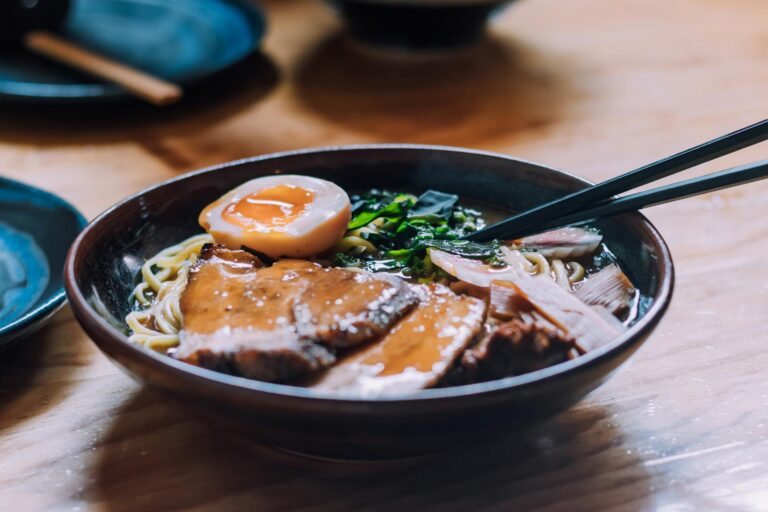
Toppings matter too. Think chashu (soy-braised pork belly), soy-mirin marinated eggs, wood ear mushrooms, scallions, and sesame seeds. Chashu alone needs a 2-hour braise. This dish doesn’t do shortcuts. Every piece requires patience.
The Honest Truth: Why Most Home Versions Fail, and What Separates Committed Cooks From Casual Ones
Tonkotsu ramen scares home cooks because it’s a planner’s game. Craving it Tuesday night? Too bad. Start the broth Sunday. Hunt down the right ingredients. Accept that technique, timing, and quality ingredients are non-negotiable. Cut corners, and the difference shows.
Sure, some blogs claim you can hack it in 6 hours with a pressure cooker. Technically possible, but the result misses the point. Pressure cooking speeds things up but skips the slow magic that defines real tonkotsu. Fukuoka’s ramen masters didn’t choose the long road for fun—they knew time was the secret.
Start the broth today. Commit to the full 18 hours. Track down good noodles and toppings this week. Do it right, and your bowl will taste like it came straight from Fukuoka. Because you respected the process.