Tokyo
Tokyo Bangkok
 Seoul
Seoul Singapore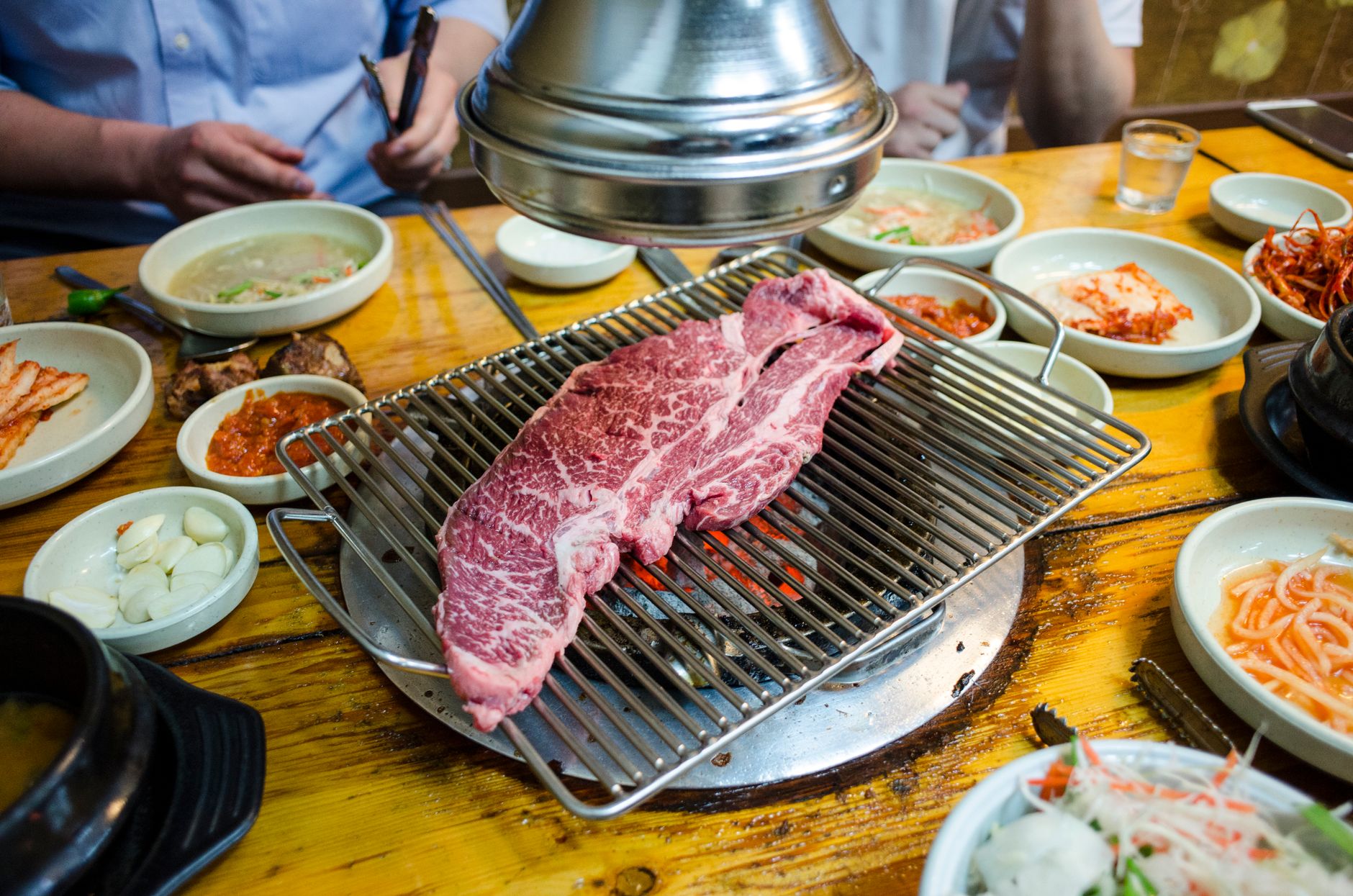
Samgyeopsal: Korean Grilled Pork Belly Guide
Samgyeopsal wasn’t always Korea’s go-to comfort food—it happened by chance. When American military lard flooded Seoul’s black markets after the Korean War, resourceful cooks started using it with pork belly. A survival tactic turned into today’s beloved grilling tradition. By the 90s, samgyeopsal spots became status symbols. Now they’re everywhere.
How Pork Belly Won Over Korea
“Three-layer meat”—that’s what samgyeopsal means. Fat, meat, skin. That combo makes it foolproof for grilling. Lean cuts dry out fast, but belly stays juicy even if you mess up the timing. The best part? When fat drips onto the flames, creating crispy edges with tender meat inside.
Korean butchers slice it thicker than Western bacon—about a quarter-inch—so it doesn’t fall apart. You’ll find it plain or marinated in soy-garlic-sesame goodness. Seoul’s Gangnam and Itaewon butchers are famous for top-tier fresh cuts, though Busan and Daegu have their own fan favorites.
Regional Twists on the Grill
Seoul goes big on premium cuts and endless banchan—think perilla leaves, spicy ssamjang, and charred garlic. Up in pig-farming country (Gangwon Province), they serve thicker slices with fewer sides and cheaper prices. Locals wash it down with makgeolli instead of soju.
Busan throws seafood into the mix—shrimp and squid join the pork party. Down in Jeolla, they prefer marinated meat dipped in doenjang-jjigae. Daegu? They go heavy on seasoning, dusting cuts with perilla powder and extra garlic before they hit the grill.
The Right Way to Grill
Those sloped table grills aren’t just for looks. They keep meat from swimming in fat. At home, tilt a cast-iron skillet so grease drains off. Cut with scissors after cooking—never before. Aim for 2-3 minutes per side until edges crisp up.
Here’s the move: Grab a perilla leaf, smear on some ssamjang, add meat, toss in raw garlic, and wrap it tight. One bite. That crunch, that heat, that garlic punch—it’s why samgyeopsal’s more than food. It’s an experience.