Tokyo
Tokyo Bangkok
 Seoul
Seoul Singapore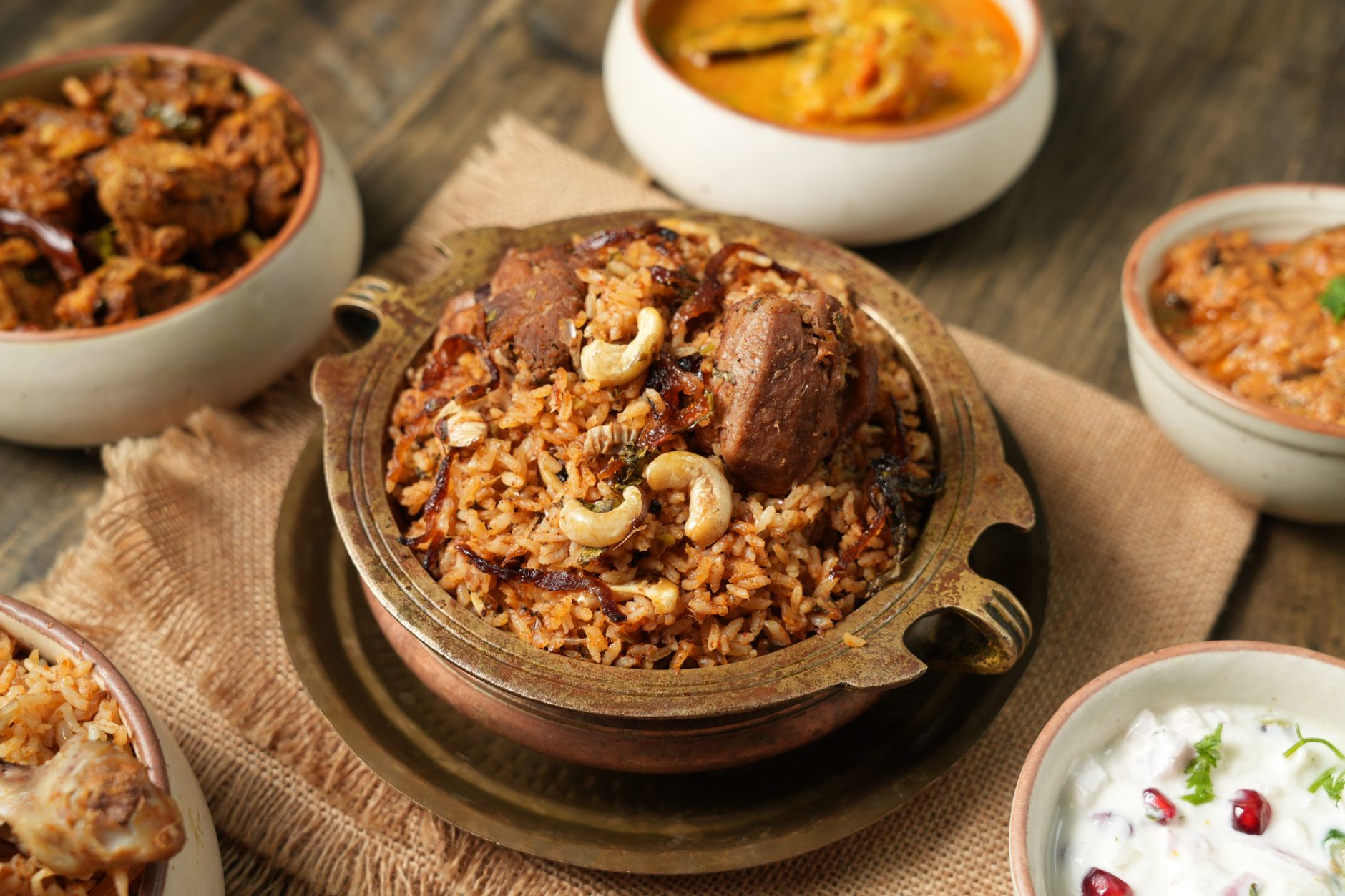
Biryani vs Pilaf: How Dum Cooking Changed Rice Forever

Indian biryani and Persian pilaf aren’t just separated by ingredients. The real difference? Pressure. And patience. A cooking method that turned rice from sidekick to star.
Biryani relies on dum pukht—rice and meat trapped together in a sealed pot, sweating it out until every grain soaks up the flavors below. Pilaf plays it cooler. Rice gets steamed solo, then meets its meat later. Same ingredients, different philosophies. Both delicious. Just solving different cravings.
Dum Pukht: Why Biryani Isn’t Just Rice With Stuff On Top
The Mughals had good taste, but biryani got revolutionary when someone thought to slap dough on a pot lid. That seal creates a pressure cooker effect where meat juices get forced back into the rice instead of escaping as steam. “Dum” means “to breathe” in Urdu—and this rice definitely does.
Real biryani needs three things: par-cooked rice, meat swimming in gravy, and that crucial dough seal. Blast the heat for two minutes to build pressure, then drop it low for 45. What comes out isn’t rice plus meat. It’s one unified thing—dark and intense at the bottom, balanced in the middle, light up top. That gradient isn’t accidental. It’s the point.
Persian pilaf says “hard pass” to all this. Rice gets toasted in fat first (“blooming,” they call it), then steams uncovered. The tahdig—that addictive crispy bottom layer—is the cook’s flex. Not a happy accident. A badge of honor.
Where To Taste The Difference: Hyderabad vs. Isfahan
Hyderabad doesn’t mess around. At spots like Haleem House, the meat cooks for hours before meeting the rice. One bite tells the story: crusty bottom rice loaded with ghee and meat drippings, perfumed middle layers, fluffy top notes. A single plate spans textures and intensities.
Isfahan does things differently. Here, the tahdig is the main event—served separately like a trophy. The rice stays light and distinct, the crispy layer adding crunch rather than merging flavors. Two approaches. Two sets of bragging rights.
Heads up for Aussies and Brits: Many biryani spots in London’s Brick Lane or Melbourne’s Footscray cut corners. Real dum cooking takes 90+ minutes. If they promise it faster? They’re steaming, not sealing. Might still taste good—but it’s not the real deal.
Stop Calling Them The Same Thing
Lumping biryani and pilaf together as “fancy rice dishes” misses everything that matters. The cooking method changes what ends up in your mouth—and why you’d want it there.
Biryani is a party dish. It’s meant to be rich, layered, enough on its own. The dum method forces flavors together through heat and time. Pilaf prefers boundaries. Rice stays rice. Meat stays meat. They share a plate, but keep their dignity.
Persian cooks might call biryani overkill. Biryani fans might say pilaf lacks ambition. Both opinions make sense. These aren’t just recipes—they’re food cultures talking.
When ordering biryani, watch for the dough seal. Listen for that hiss when they crack it open. Notice how the bottom tastes deeper than the top. That’s dum pukht doing its job. And that’s why technique matters.