Tokyo
Tokyo Bangkok
 Seoul
Seoul Singapore
Nasi Uduk: Indonesia’s Defining Comfort Food Explained
Nasi uduk isn’t just breakfast—it’s Indonesia on a plate. Coconut rice cooked with aromatics appears everywhere from street carts to home kitchens, familiar to 270 million people who’ve eaten it since childhood. This dish explains Indonesian food better than any textbook: layered flavors, perfect balance, meant to fill you up without fuss.
Why Nasi Uduk Works: Technique Over Ingredients
Start with rice cooked in coconut milk instead of water. Add bay leaves, garlic, shallots, ginger, turmeric. The result? Creamy, golden rice that’s nothing like Thai or Malaysian versions. The magic is in restraint. No sugar. No lime. No flashy garnishes. The spices play backup, not lead.
Good nasi uduk whispers coconut. Turmeric should barely register—just earthy hints. Garlic and shallots melt into the rice, building savory depth. Bad versions? Too salty from cheap coconut milk, gluey texture, flat flavor. The best grains stay separate, each bite slightly different depending on where the aromatics settled.
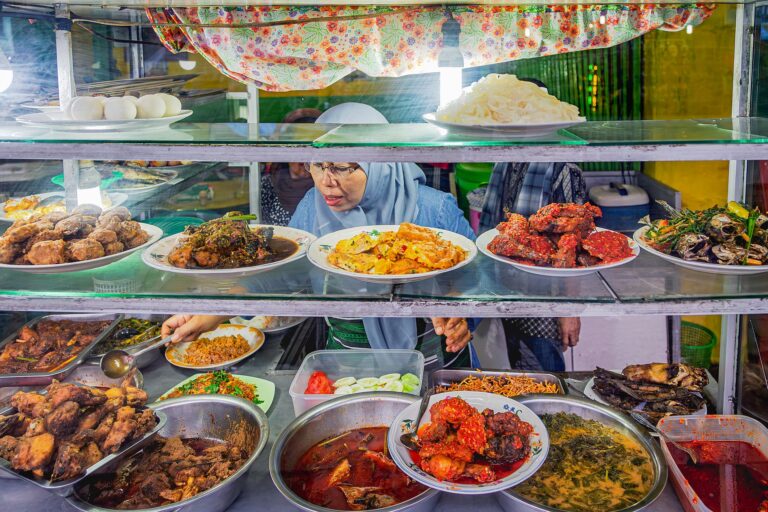
Heat comes from what surrounds the rice: sambal, crispy shallots, maybe an egg or fried chicken. That’s the Indonesian breakfast blueprint. Rice is the foundation. Everything else adapts.
Jakarta, Bandung, and the Map of Regional Variation
Nasi uduk changes across Indonesia, though most visitors miss the details. In Jakarta—the birthplace of street food culture—the rice leans richer. More coconut milk, sometimes butter. Vendors compete fiercely here. Warung Nasi Uduk Khas Betawi near Kota Tua? Classic. Coconut-forward rice meets fermented chili sambal with serious depth.
Bandung does it lighter. Ginger and galangal shine brighter. Some vendors use just a splash of coconut milk, treating it as seasoning rather than the main event. The rice pairs differently here—cleaner, sharper.
Head east to Surabaya and turmeric takes center stage. White pepper sometimes joins the party. The rice cooks drier, grains more distinct. These differences aren’t accidents. They reflect local ingredients, water, generations of taste memories. Order nasi uduk in the wrong city and locals will spot you immediately.
The Breakfast Economy: Why Nasi Uduk Matters Beyond Taste
Nasi uduk fuels Indonesia. At 15,000-25,000 rupiah ($1-$1.50) per plate, everyone eats it—construction workers, office staff, kids heading to school. Vendors start before sunrise, cook one batch, sell out by mid-morning. This isn’t artisanal food. It’s breakfast built for speed.
What guidebooks miss? Vendors aren’t chasing trends. They’re mastering repetition. The best spots taste the same today as twenty years ago. That’s not boring—it’s precision.
Don’t sleep on the sambal. Most vendors ferment their own for weeks: chilies, garlic, shallots, salt. This version packs funk and umami, completely different from dinner sambals. It’s designed to wake you up without overpowering the rice.
What You Should Actually Do
Skip hotel versions. Find a warung that opens before 7 AM in a residential area. Get it with a fried egg, maybe chicken if they have it. Eat standing up or perched on plastic furniture. Taste the rice first—notice how coconut coats each grain. Then add sambal. That’s how it’s done.