Tokyo
Tokyo Bangkok
 Seoul
Seoul Singapore
Gaeng Daeng: Thailand’s Red Curry That Rewrites What You Know
Most folks think Thai red curry tastes the same no matter where you are in Thailand. Not even close. The gaeng daeng in Chiang Mai hits different than Bangkok’s version—and the southern take is another beast entirely. These regional quirks show how Thai cooks really approach food. Forget the uniform versions at your local takeout spot—authentic gaeng daeng changes with the landscape, local chilis, and what’s fresh that day.
Why Gaeng Daeng Isn’t What You Think It Is
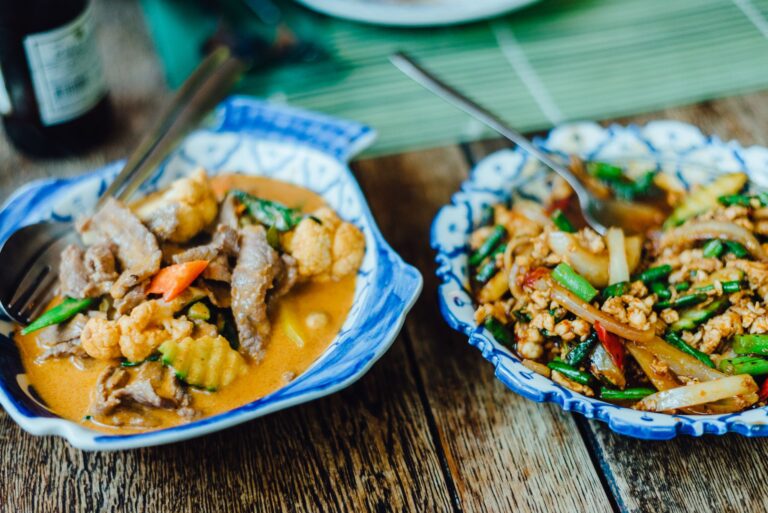
“Red curry” barely scratches the surface. This dish wasn’t invented in one place—it evolved separately across Thailand as cooks worked with what they had. The method stays consistent: pound chilis with aromatics, build flavor with curry paste, then balance it all with coconut milk and protein. Central Thailand’s sweeter version with bamboo shoots and Thai basil might be what you know. But Isaan’s take burns hotter. Down south near Phuket? Expect fishier notes from local seafood and shrimp paste.
That flexibility is the whole point. Thai cooking treats recipes like suggestions, not rules. Gaeng daeng works because it adapts—to ingredients, to regions, to whoever’s making it.
The Ingredients That Actually Matter
Everything starts with the paste. Fresh red chilis (prik chee fah or prik yuak depending on your heat tolerance) get pounded with galangal, lemongrass, garlic, and shallots. Shrimp paste might join the party—or not, depending where you are. The paste does the heavy lifting, but coconut milk turns it into something special. Not just any coconut milk—the good stuff that mellows the heat without drowning it.
Proteins and veggies play musical chairs based on location. Chicken dominates in central regions while seafood takes over near coasts. Bamboo shoots, bell peppers, long beans, Thai eggplant—they all make appearances, but never the same way twice. Gaeng daeng isn’t about following some ingredient checklist. It’s about understanding how chilis bring fire, coconut milk adds creaminess, and whatever protein you choose soaks up all that goodness.
What Gaeng Daeng Reveals About Thai Food Thinking
Thai food lives for contrast—hot playing off sour, salty tangoing with sweet. Gaeng daeng nails this. Chilies bring the heat, coconut milk sweetens the deal, fish sauce pumps up the salt, lime juice cuts through. But here’s the kicker: these flavors don’t blend into one homogenous sauce. They stay distinct, hitting your taste buds at different times like a flavor fireworks show.
This isn’t some fancy chef trick—it’s generations of kitchen wisdom. Thai cooks knew layered flavors beat one-note sauces every time. They also got that everyone’s tastes differ, so they built in room for adjustments. Your bowl of gaeng daeng isn’t some finished museum piece—it’s an invitation to tweak with extra lime, more chilis, or another splash of fish sauce.
Making it at home? Don’t stress over exact measurements. Fresh paste helps, quality coconut milk matters, but the real secret is tasting as you go. Gaeng daeng teaches a simple truth: good cooking isn’t about perfection—it’s about knowing when to stick to the plan and when to wing it.