Tokyo
Tokyo Bangkok
 Seoul
Seoul Singapore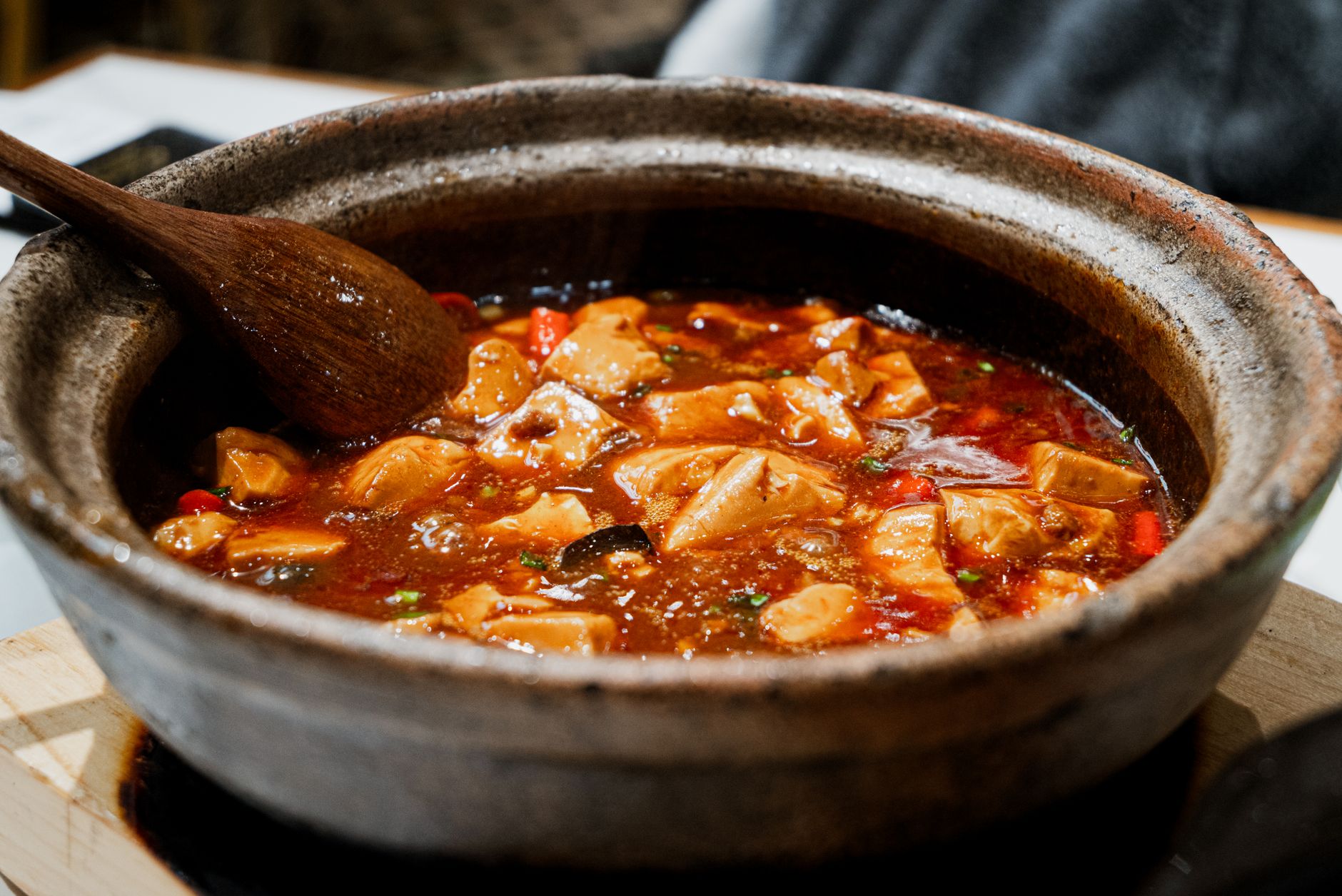
Mapo Tofu: Origins, Variations, and Where to Eat It

Mapo tofu is a deceptively simple dish: soft tofu cubes swimming in a rust-colored oil slicked with ground pork, fermented black beans, and the distinctive numbing-heat combination that defines Sichuan cuisine. What separates a forgettable version from an essential one is the interplay between the silken tofu’s delicate texture and the aggressive, tingling bite of Sichuan peppercorns—a sensation called málà that coats your mouth and lingers. It’s one of China’s most globally recognized dishes, yet few versions served outside Sichuan province capture what makes it work.
Origins and History
Mapo tofu emerged in Chengdu during the late Qing Dynasty (mid-1800s), though exactly when remains disputed among food historians. The most credible account traces it to a small restaurant in the Chen Mapo alley near Wanfu Bridge in Chengdu’s old city, run by a woman surnamed Chen with a pockmarked face—”mapo” (麻婆) literally translates to “pockmarked woman.” The restaurant served this dish to laborers and dock workers, combining affordable tofu with spicy, oily sauces to mask the taste of lower-quality ingredients and provide calories for physical work.
What began as working-class street food became emblematic of Sichuan cooking after the Qing Dynasty fell and Republican-era Chengdu transformed its food culture. By the 1950s, mapo tofu had been systematized into an official Sichuan Classic Dish, with standardized recipes published in regional cookbooks. The dish traveled north to Beijing and Shanghai during the mid-20th century, where it was adapted—often made less spicy and with thickened sauces for regional palates. The numbing peppercorn, however, remained non-negotiable; removing it would erase the dish’s defining characteristic.
Regional Variations
Chengdu: The original remains uncompromising. Authentic versions feature thin layers of chili oil (often 2-3 tablespoons per serving) that coat rather than drown the tofu. The sauce uses doubanjiang (fermented broad bean paste) and douchi (fermented black beans), creating a savory, almost fermented funk underneath the heat. Málà intensity is genuine—the Sichuan peppercorn creates that distinctive numbing sensation that can surprise unfamiliar eaters. Meat is optional but traditional; when present, it’s finely ground and cooked until it breaks into tiny, crunchy bits.
Beijing: The capital’s version waters down the málà factor considerably, recognizing that northern palates historically preferred salty-savory over numbing-hot. Beijing renditions often add cornstarch slurry to create a glossier, more cohesive sauce rather than loose oil. The tofu cubes tend to be slightly firmer, less likely to collapse. Sichuan peppercorn is present but dialed back; the dish becomes more about the umami of fermented beans and less about the peppercorn’s physical mouth-tingle.
Shanghai: Shanghai cooks have treated mapo tofu with something between respect and skepticism, often sweetening it with a touch of sugar and reducing the peppercorn load further. The oil content decreases, replaced with a more viscous, sauce-like consistency. Some Shanghai restaurants add oyster sauce or soy sauce for additional umami complexity. The result is approachable but dilutes the Sichuan identity—a trade-off for broader appeal.
What Makes a Great Mapo Tofu
Excellence in mapo tofu depends on a precise hierarchy of ingredients and technique:
The Tofu: This cannot be silken tofu from the supermarket shelf. True mapo tofu uses fresh, hand-made soft tofu (嫩豆腐), often purchased the morning of preparation. It should be so delicate that lifting it requires a wide spoon rather than chopsticks. The tofu must be blanched in salted water first—a step many home cooks skip—to give it slight structural integrity without toughening it.
The Oil: Not just any chili oil. The best versions use a base of neutral oil infused with whole dried chilies (typically Facing Heaven chilies, or朝天椒), fried until fragrant but not burnt. The oil should taste of chili, not scorch. This is labor-intensive; most restaurants prepare their chili oil fresh every few days.
The Numbing Agent: Sichuan peppercorns (花椒) must be toasted to activate their essential oils, then ground coarsely. Pre-ground peppercorn loses potency. A proper serving includes enough peppercorn that your mouth tingles within seconds of the first spoonful.
The Umami Base: Doubanjiang and douchi provide savory depth. These fermented pastes should be fragrant and funky, never overpowered by sugar or salt. They’re cooked in oil at the start, blooming their aromatics before other ingredients are added.
The Meat: Ground pork is traditional, but not essential. When used, it should be cooked until it forms tiny, distinct pieces—not a cohesive paste. Some restaurants cook the pork separately with aromatics (garlic, ginger), then combine with the sauce. Others add raw pork to hot oil and let it cook in place, which can result in greasier, less flavorful meat.
The Counterintuitive Truth: Mapo tofu is not supposed to be silky or refined. The best versions are deliberately rough, with visible peppercorn particles, oil that pools at the edges, and a sauce that tastes aggressively fermented. Restaurants that polish it into something smooth and glossy have usually overprocessed it.
Where to Try Mapo Tofu: City by City Guide
Chengdu: The epicenter. Visit Chen Mapo Doufu (陈麻婆豆腐) in Wuhou District—the historical restaurant operates in a modern space but maintains the original recipe structure. Alternatively, find a casual Sichuan restaurant in the Kuanzhai Xiangzi (宽窄巷子) alley district; even modest spots execute mapo tofu correctly here, as it’s the expected baseline. For adventurous eaters, the restaurant Lai Tangyuan serves an extremely traditional, aggressively numbing version.
Beijing: Sichuan restaurants cluster around Sanlitun and Dongzhimen. Da Shuai (大帅) serves a reliable Beijing-adapted version with balanced heat. Chuan Wei Guan (川味馆) in Chaoyang offers more traditional preparations. Note that Beijing versions will feel less intense than Chengdu’s; this is intentional, not a flaw.
Shanghai: Seek out restaurants in the Jing’an and Huangpu districts, particularly around Nanjing Road. Baohelou (宝荷楼) maintains a Sichuan heritage but will sweeten their mapo tofu compared to authentic Chengdu versions. For a purer interpretation, visit restaurants explicitly labeled 正宗四川 (“authentic Sichuan”).
Price Guide
Chengdu: ¥18-35 per serving at casual restaurants; ¥45-65 at established establishments like Chen Mapo. Street stalls may charge as little as ¥12.
Beijing: ¥28-48 at mid-range restaurants; ¥55-75 at upscale Sichuan restaurants. Hotel restaurants will exceed ¥100.
Shanghai: ¥35-55 at casual spots; ¥60-85 at recognized Sichuan restaurants. International hotels charge ¥90+.
Mapo tofu matters to Asian food culture because it represents Sichuan’s successful assertion of its regional identity at the national level—a working-class dish that refused to be softened into mainstream palatability, and instead converted the country to its own aesthetic of heat, numbing spice, and fermented funk.