Tokyo
Tokyo Bangkok
 Seoul
Seoul Singapore
Tom Kha Gai: The Thai Comfort Soup That Defines Home Cooking
In Bangkok, Chiang Mai, and everywhere in between, tom kha gai isn’t fancy—it’s Tuesday night dinner. You’ll spot it in lunch boxes, at dawn markets, bubbling in home kitchens. Unlike Instagram-friendly pad thai, this soup doesn’t show off. It just feeds people. That’s exactly what makes it worth knowing.
The Soup That Gets Thai Food Right
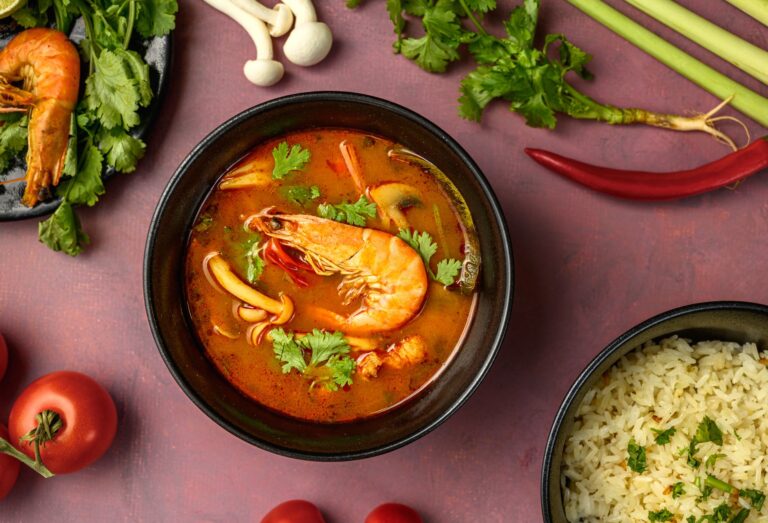
Tom kha gai nails the Thai food philosophy: salty, sour, sweet, spicy all in balance, with nothing hogging the spotlight. No gloopy sauces. No one-note flavors. The broth does the talking—creamy coconut milk backs up chicken and herbs instead of smothering them. That subtlety? Pure Thailand. Up in Isaan, where this soup shares the table with grilled meats and papaya salad, cooks know a good broth should wake up your appetite, not kill it. Tom kha gai plays team player in a meal, clearing the palate between bites of bolder dishes. It’s never the main event.
Galangal, Lime Leaves, and the Non-Negotiables
Three ingredients make or break tom kha gai, and Western cooks often botch them: galangal (kha), Thai lime leaves (bai maengda), and fish sauce. Galangal isn’t ginger—it’s spicier, sharper, the kind of root that clears your head. Thai cooks leave big slices floating in the bowl because the flavor builds as you eat. Lime leaves? Tear them to release oils that regular lime zest can’t match. Fish sauce (just 1-2 tablespoons per pot) doesn’t stink up the soup—it makes everything else taste brighter. Watch street vendors from Hua Hin to Phuket prep their lunch batches: they handle these ingredients like a guitarist tuning up. Not fussy. Just exact. Nail these three, and the soup sings. Miss one, and you’ve got bland coconut water.
Same Soup, Never the Same Twice
Tom kha gai’s magic is its loose rules. In Ubon Ratchathani, they might dial up the chilies and ease off the coconut milk. Bangkok stalls toss in straw mushrooms; northern cooks wouldn’t bother. The bones stay the same—broth, chicken, aromatics, balance. That wiggle room keeps the dish alive across Thailand without turning it into some uniform chain-restaurant version. It’s also why mastering it is tough. No safety net. Every tweak shows. One cook’s tom kha gai tells you where they’re from and how they eat. Try five versions at a single market—each tastes different, and none are wrong.
Making it at home? Hunt down fresh galangal and lime leaves (online works). No shortcuts. Build the broth first, taste before adding chicken, tweak salt and lime at the end. This soup teaches Thai cooking better than any curry—it’s all about patience, not fancy moves.