Tokyo
Tokyo Bangkok
 Seoul
Seoul Singapore
Bao Bun: Origins, Variations, and Where to Eat It

A bao bun is a soft, steamed wheat flour bun, usually stuffed with meat, veggies, or sweet fillings. The magic happens when the dough—leavened with yeast or baking powder—gets steamed instead of baked. This creates that signature fluffy texture with a hint of sweetness. The outside looks smooth, often with a little crease where it naturally splits open. Inside? Pure tenderness. What started as a humble Chinese snack has gone global, but regional styles across China, Taiwan, and Hong Kong still show wildly different approaches to fillings, sauces, and balance.
Origins and History
Bao buns popped up during the Qing Dynasty, building on older steamed bread traditions from southern China. Cantonese communities really ran with it. By the 19th century, dim sum spots were refining the recipes. The big innovation? That intentional split in the bun, making it way easier to stuff and eat. Before that, people just tore open plain baozi.
The savory bao we know today took shape in 1950s Hong Kong, with char siu bao becoming a dim sum classic. Taiwan went its own way in the 70s—sweeter dough, bolder fillings like pork belly and veggies. Shanghai kept things simple: pork and scallions, no fuss. You can trace each style back to local ingredients and history. Hong Kong’s char siu bao? Partly inspired by Western BBQ tricks. Taiwan’s creative fillings? Came with better access to diverse meats.
Regional Variations
Hong Kong-style bao keeps the dough barely sweet, letting the char siu (barbecued pork) shine. The bun gets an egg wash before steaming for a slight sheen. Traditional spots use pork chunks glazed with oyster sauce, hoisin, and five-spice. Pro tip: many Hong Kong bao hide a cube of salted egg yolk inside for a salty-sweet punch.
Taiwan-style bao goes sweeter with the dough. The star is gua bao—a split bun stuffed with braised pork belly, pickled greens, cilantro, and crushed peanuts. Taipei vendors get creative: mushroom-chestnut combos, chocolate fillings, even spicy chili oil kicks. The ratio? More stuffing, less bun.
Shanghai-style bao plays it straight—minimal dough additions, often filled with pork and aspic (that meat jelly from xiaolongbao). The bun’s denser, the filling more modest. Sweet versions like red bean or custard bao are bigger here than elsewhere.
What Makes a Great Bao Bun
It all starts with the dough. Get the water-to-flour ratio right (65-75%), nail the fermentation (2-4 hours), and steam it just long enough (12-15 minutes). The texture should be springy but tear easily. Screw up the timing, and you get gummy or doughy disasters.
Good fillings take work. Real char siu means slow-braising pork shoulder for hours with soy, oyster sauce, and rock sugar. Taiwanese pork belly needs the same patience—soy, star anise, Shaoxing wine. Shortcuts taste like regret.
The best bao keep the dough and filling separate. Amateur buns often stick together; pros manage steam and sometimes dust the inside with cornstarch to prevent gluey messes.
Where to Try Bao Bun: City by City Guide
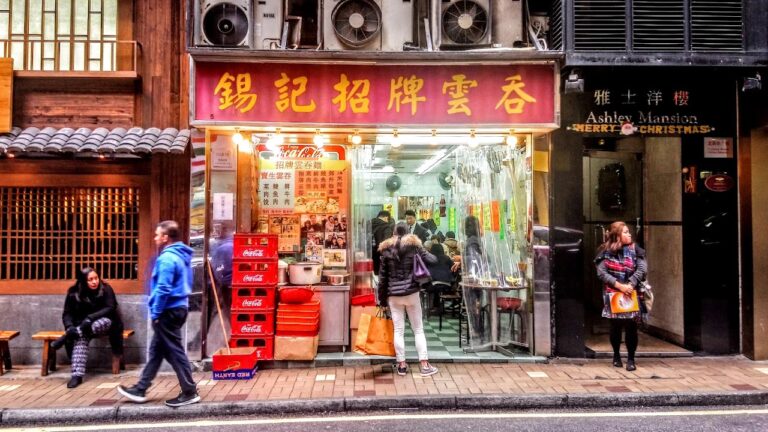
Hong Kong (Central, Mong Kok): Dim sum is bao central here. Tim Ho Wan does classic char siu bao, though quality wobbles these days. Lian Feng Teahouse sticks to old-school methods. For street eats, hit Temple Street Night Market’s dai pai dong carts at dusk for pork belly bao.
Taipei (Taipei Main Station, Ningxia Night Market): Gua bao rules. Lin Dong Fang near the station is legendary—prepare to queue. Ningxia Night Market vendors mix it up: mushrooms with pork, even vegetarian options. Chun Shui Tang cafes experiment with fillings like wagyu beef.
Shanghai (Huangpu District, Jing’an): Nanxiang Steamed Bun Restaurant does pork-and-aspic bao alongside their famous xiaolongbao. For no-frills versions, grab a pork-scallion bao from breakfast stalls near People’s Square before 9 AM.
Price Guide
Hong Kong: Dim sum bao: HK$3.80-5.50 (about $0.50-0.70) each. Fancy spots charge HK$6-8. Street pork bao: HK$15-20.
Taipei: Gua bao: TWD $30-50 ($1.00-1.65). Dessert bao in cafes: TWD $50-120.
Shanghai: Breakfast bao: RMB ¥3-5 ($0.40-0.70). Restaurant versions: RMB ¥8-12.
Bao buns don’t care about status. They’re as happy in a Michelin spot as a midnight street cart, loved by bankers and laborers alike. A century of wars, boom times, and cultural shifts couldn’t kill them—just made them adapt. Proof that sometimes, the humblest foods carry the biggest stories.