| |

Laksa vs Ramen: Coconut Curry Broth vs Tonkotsu

I’ll never forget watching a Penang street vendor simmer her laksa broth for just forty minutes, while a ramen chef in Tokyo kept his tonkotsu bones rolling for eighteen hours. Both were making what they considered the perfect noodle soup, yet their methods couldn’t have been more different. That moment taught me that laksa and ramen aren’t just regional variations on a theme—they’re entirely different cooking philosophies wrapped around noodles.

The Broth Philosophy: Speed Versus Surrender

Laksa broth is about extraction and layering. In Penang and Kuala Lumpur, cooks build flavor quickly by toasting spice pastes—dried chilies, galangal, turmeric, lemongrass, and shrimp paste—directly in hot oil. This releases volatile oils and deepens flavors in minutes. Then comes the coconut milk, which arrives relatively late and acts as both a cooking medium and a flavor balancer. The whole process takes under an hour because the broth isn’t trying to pull collagen and gelatin from bones. Instead, it’s coaxing every bit of character from spices and aromatics.

Ramen, particularly tonkotsu from Fukuoka, operates on patience. Pork bones simmer for half a day or longer, breaking down into a creamy, opaque broth that’s almost more about texture than spice. The fat emulsifies into the water, creating that signature richness. Japanese cooks understand that time transforms bones into something entirely new—not just flavored water, but a fundamentally different substance. This is why ramen shops open early and start their broths the night before.

Coconut Versus Collagen: Two Paths to Richness

Here’s where these soups truly diverge. Laksa achieves its body and richness through coconut milk—a plant-based fat that’s added intentionally and relatively quickly. The coconut doesn’t dissolve into the broth; it remains present as a distinct flavor layer. You taste the spices, you taste the stock, and you taste the coconut as separate but harmonious elements. This is why laksa broth stays clear enough to see through initially, only becoming opaque and creamy once the coconut milk goes in.

Tonkotsu achieves richness through bone breakdown. The collagen in pork bones converts to gelatin, and the marrow fat emulsifies into the liquid. The result is a broth that’s naturally thick and creamy without any added dairy or plant-based fat. A proper tonkotsu broth should coat your spoon. This isn’t added richness—it’s structural richness that comes from patient cooking. The flavor is pork-forward and subtle, letting the umami speak for itself.

Building Your Bowl: Toppings as Completion Versus Toppings as Contrast

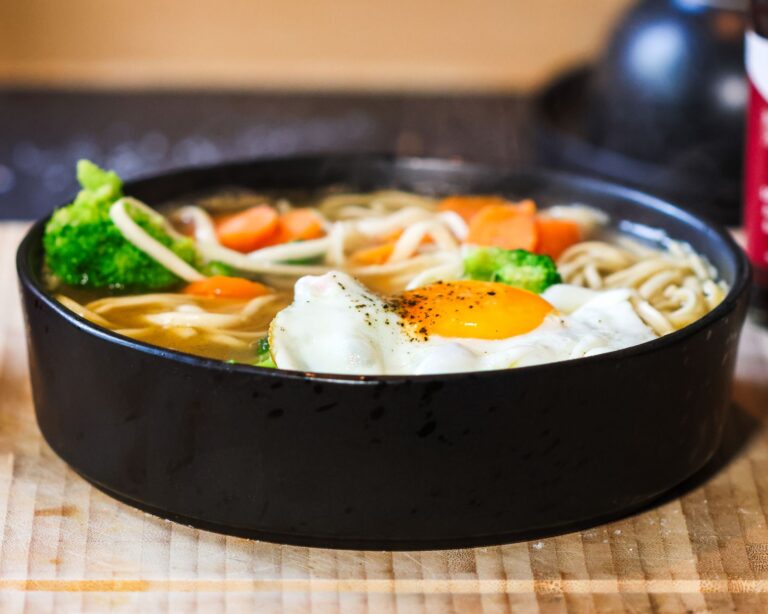
In a laksa bowl, toppings—shrimp, fish cakes, bean sprouts, fried shallots—feel like they’re completing the dish. They add textural variety and protein, but the broth is already the star. You could eat the broth alone and be satisfied. The toppings enhance rather than transform.

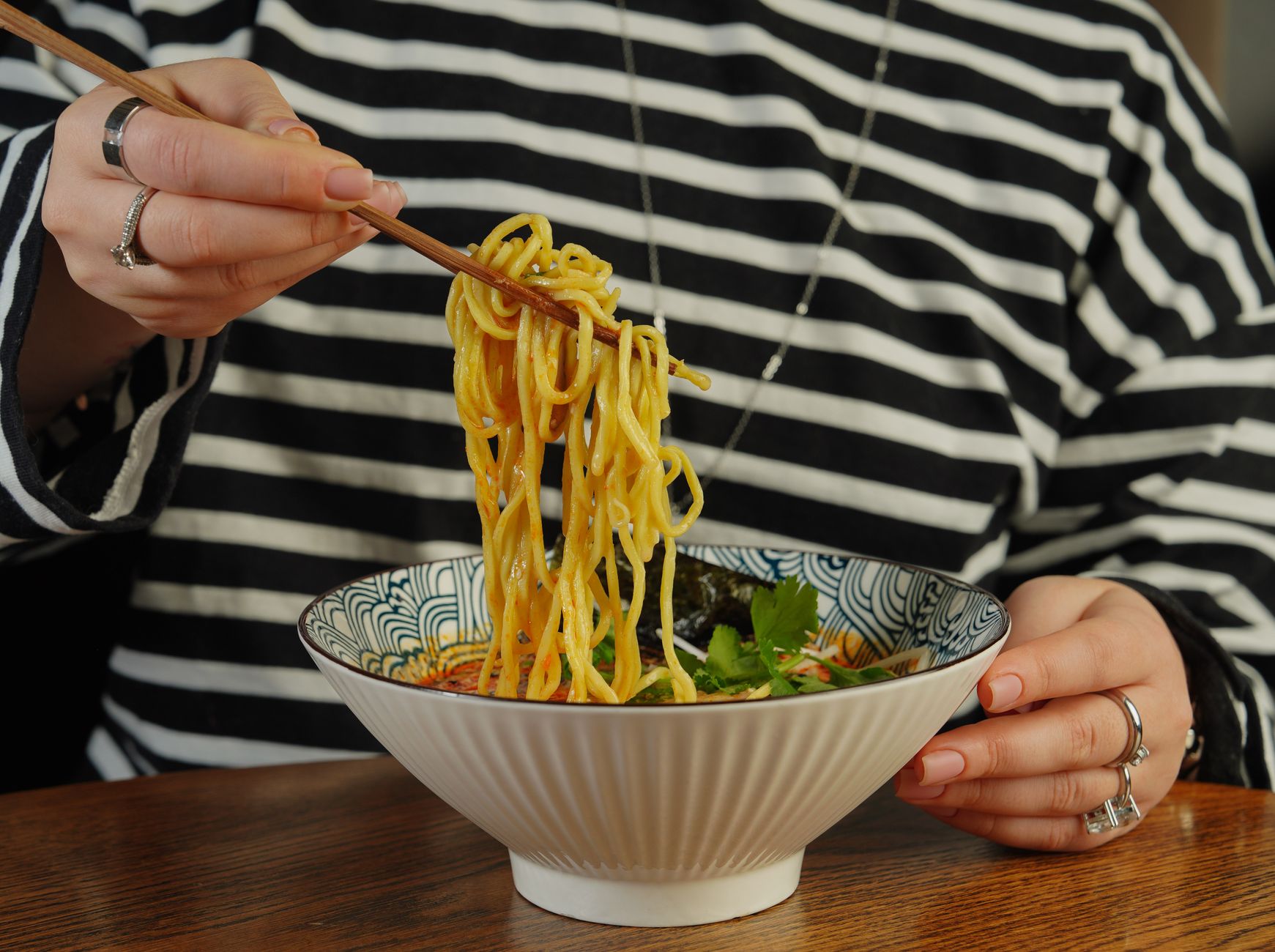
With ramen, particularly tonkotsu, toppings feel more essential. The soft-boiled egg, chashu pork, nori, and bamboo shoots aren’t just additions—they’re part of the intended experience. The broth provides the foundation, but the toppings provide contrast: richness against the soft egg yolk, umami against the nori’s mineral notes, tenderness against the crunch of bean sprouts. Ramen is more about balance between components.

If you’re cooking at home, the choice is practical: laksa if you want a big flavor hit in under an hour, ramen if you’re willing to plan ahead for something that rewards patience. Both are worth learning, and honestly, a good cook should have both in their rotation.

Sarah Kim
About the Author
Sarah Kim

Sarah Kim is WokFeed's Korean food correspondent. A Seoul native who grew up eating in pojangmacha tents and KBBQ restaurants, she now writes about the global spread of Korean food culture. Her coverage spans traditional ganjang gejang to viral K-food trends on TikTok.

📊 Data Sources & Editorial Standards
📍 Google Maps✍️ Editorial Research

WokFeed's restaurant guides are compiled from real traveler data, on-the-ground research, and cross-verified across multiple platforms. Our editorial team fact-checks all recommendations before publication.

Similar Posts