Tokyo
Tokyo Bangkok
 Seoul
Seoul Singapore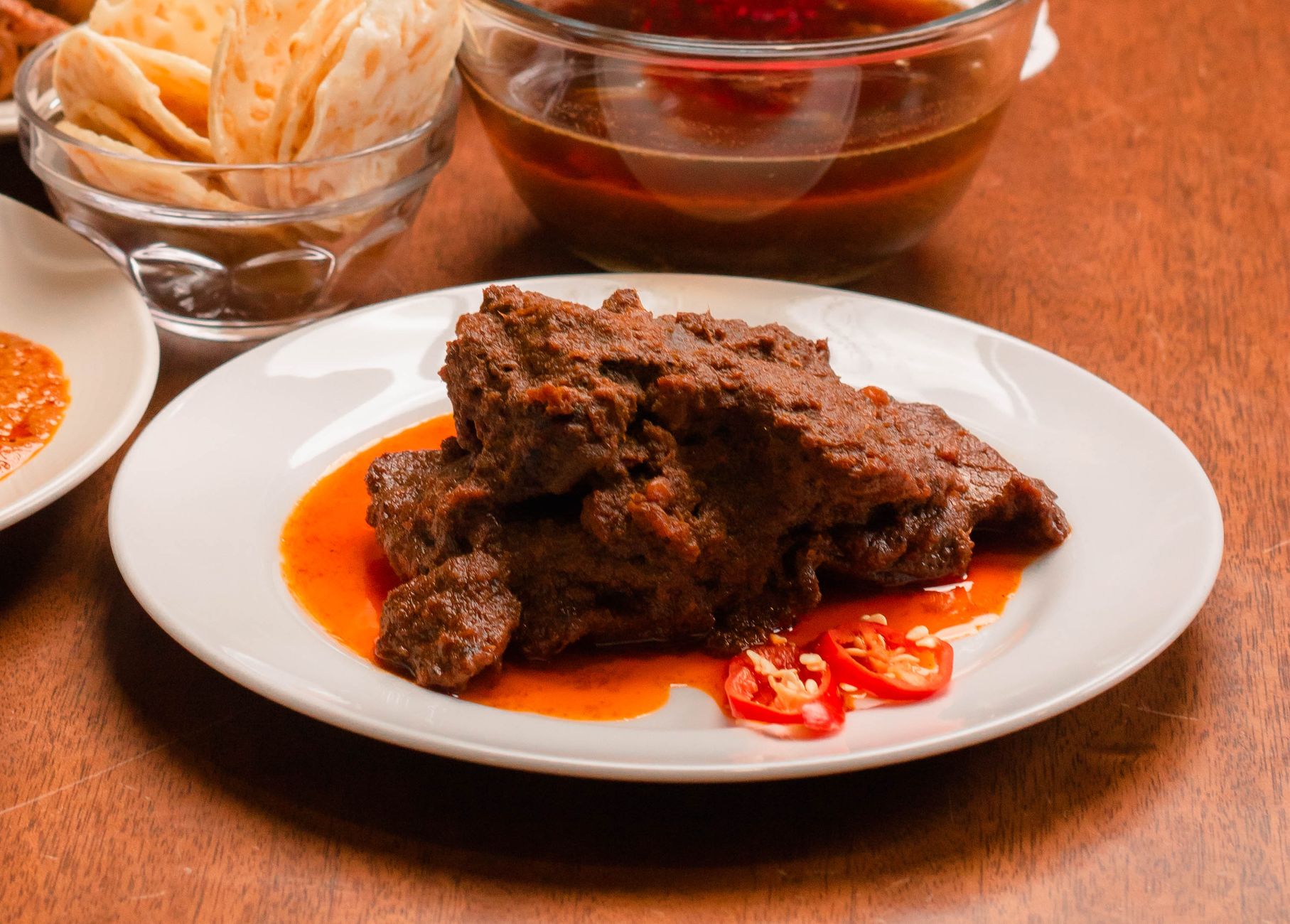
Rendang: Origins, Variations, and Where to Eat It
What Is Rendang?
Rendang is a slow-cooked curry from West Sumatra where meat—traditionally beef, chicken, or duck—is braised in coconut milk reduced with a paste of chilies, garlic, galangal, turmeric, and other aromatics until the liquid nearly disappears and the meat becomes fork-tender, coated in a dark, thick, caramelized sauce. What distinguishes rendang from other curries is its cooking method: rather than maintaining sauce consistency, the cook reduces the coconut milk until it clings to the meat in a concentrated coating, creating texture that is neither soupy nor dry. The result is intensely savory, complex in heat, and can be stored for weeks—a practical feature that made it essential to Minangkabau culture, where it developed as a way to preserve meat without refrigeration.
Origins and History
Rendang originates from the Minangkabau people of West Sumatra, an ethnic group with a matrilineal society and sophisticated culinary traditions shaped by trade routes connecting India, the Middle East, and China. Historical records suggest rendang emerged between the 16th and 17th centuries, though pinpointing an exact date is impossible—food evolves gradually, not overnight. The dish reflects Minangkabau trading networks; the coconut milk and chilies are indigenous, but the spice combination—particularly the use of galangal and turmeric—shows influence from Indian and Malay cooking traditions.
The Minangkabau diaspora throughout Indonesia, particularly to Jakarta and other cities, spread rendang beyond West Sumatra in the 20th century. By the 1980s and 1990s, rendang had become so synonymous with Indonesian identity that it appeared on national airline menus and at state dinners. A counterintuitive fact: rendang was not always the national dish. This status was largely cemented through urban migration and deliberate cultural marketing—rendang became more Indonesian as Indonesia became more urbanized and centralized.
Regional Variations
Padang and West Sumatra: The original rendang remains the benchmark. Padang versions use beef (rendang daging) almost exclusively and are typically the spiciest, with visible chilies throughout. The sauce clings tightly to meat and has a dark brown, almost mahogany color. Padang restaurants traditionally serve rendang as part of “nasi padang”—a rice plate with multiple small dishes.
Jakarta and Central Java: Urban rendang tends toward chicken (rendang ayam) and is often slightly sweeter, with more coconut milk retained in the sauce. Jakarta versions sometimes include additional ingredients like potatoes or eggs, making it more of a complete dish than a protein-focused preparation. The heat level is moderated for broader appeal.
Kuala Lumpur and Malaysian Rendang: Malaysian rendang (which has its own Minangkabau heritage through historical migration) tends to use a higher ratio of coconut milk to meat, resulting in a saucier, more luxurious texture. Malaysian cooks often add candlenuts (kemiri) for thickening, and some versions include ginger more prominently than turmeric. Rendang lemak—a richer version with extra coconut cream—is distinctly Malaysian.
Rendang Jengkol and Rendang Telur: Beyond meat, West Sumatra also produces rendang made with stink beans (jengkol) and eggs, variations that are less known internationally but equally complex and equally important to regional cuisine.
What Makes a Great Rendang
The foundation is the paste: fresh red chilies, garlic, shallots, galangal, turmeric, ginger, and lemongrass ground into a fine, wet consistency. Some recipes include candlenuts or peanuts as a thickening agent. This paste is fried in oil until fragrant—a step that cannot be rushed, as it develops the base flavor.
The meat matters. Beef should be cut into 2-3 inch chunks and should be tough (chuck, brisket, or shin), as the long braise tenderizes it while extracting collagen that enriches the sauce. Chicken should be thigh or leg; breast meat becomes stringy. Duck requires longer cooking but produces exceptionally rich results.
Coconut milk quality is non-negotiable. Fresh or high-quality canned versions (check ingredient lists—only coconut and water) produce smooth, rich sauce. Cheap coconut milk contains gums and stabilizers that create an oily, separated texture.
Cooking time typically ranges from 45 minutes to 2 hours depending on meat type and heat level. The target is when the coconut milk has reduced by 70-80%, the meat is completely tender, and the sauce coats each piece. The color should deepen as water evaporates—this is caramelization, not burning.
Poor rendang is watery (insufficient reduction), underseasoned, or made with paste that wasn’t fried long enough, resulting in raw spice flavor rather than developed depth.
Where to Try Rendang: City by City
Padang: Eat at Rumah Makan Minang locations throughout the city—these casual, traditional restaurants serve nasi padang with rendang daging that sets the standard. Prices are low because portion control and rapid turnover matter more than premium positioning. For a more upscale version, Bundo Kanduang (various locations) offers refined takes while maintaining authenticity. The Padang Harbor area (Pelabuhan) has old-school warung serving rendang to port workers—less touristy, more real.
Jakarta: Central Jakarta’s Menteng and Senayan neighborhoods have upscale Indonesian restaurants where rendang is plated carefully. Soto Betawi Nyonya Afung serves versions prepared by Minangkabau cooks. For casual nasi padang, head to anywhere in Blok M or Tanah Abang where dozens of Padang restaurants cluster. Prices vary wildly; expect 40,000-80,000 IDR at casual spots, 150,000-250,000 IDR at restaurants.
Kuala Lumpur: Pavilion KL and Mid Valley food courts offer rendang at Malaysian mall prices (18-28 MYR). For serious versions, Restoran Minang in Jalan Sultan Ismail serves both Indonesian and Malaysian interpretations. Pasar Besar Kuala Lumpur’s surrounding restaurants offer authentic rendang lemak cooked by Minangkabau migrants’ descendants.
Price Guide
Padang casual warung: 25,000-50,000 IDR (~$1.50-3 USD) | Jakarta nasi padang: 40,000-80,000 IDR (~$2.50-5 USD) | Jakarta restaurant: 150,000-350,000 IDR (~$10-23 USD) | Kuala Lumpur food court: 15-28 MYR (~$3-6 USD) | Kuala Lumpur restaurant: 35-65 MYR (~$7.50-14 USD)
Why Rendang Matters
Rendang represents how Southeast Asian food preserves history through cooking technique—a dish born from necessity (preservation without refrigeration) that became an expression of national identity through diaspora, urbanization, and deliberate cultural stewardship.